

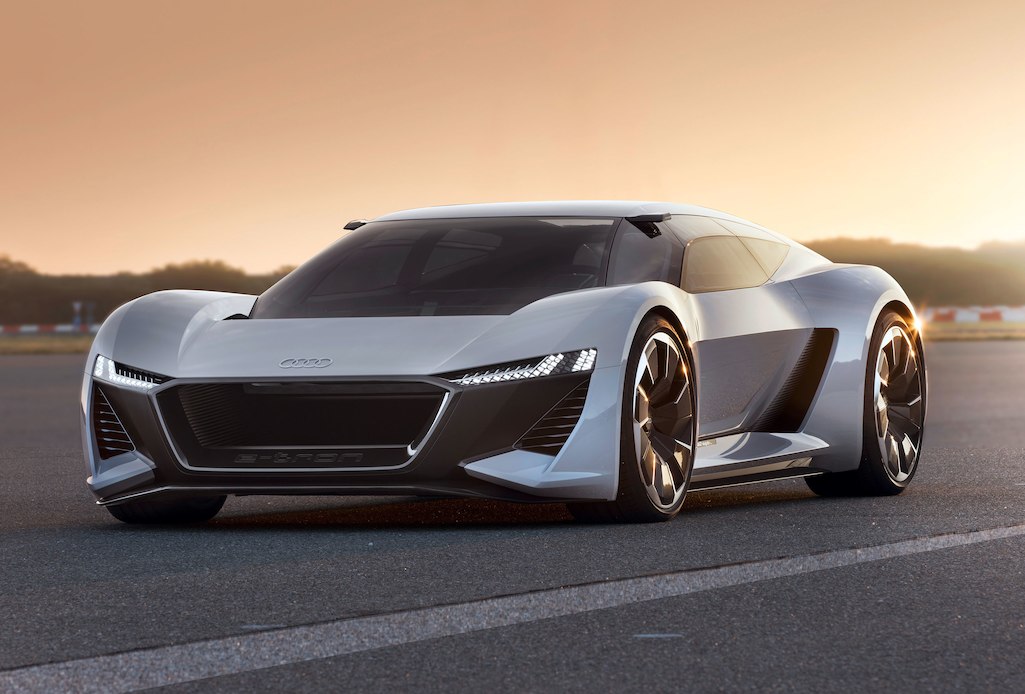
The world stepped back when Audi launched its e-tron electric supercar range in 2009. The first model had an electric motor on each corner. However top speed was limited to 138 miles per hour. The launch model at the Geneva Show boasted a 1,036 lb. lithium-ion battery in front of the rear axle. Who says electric cars are for losers? Audi defiantly seemed to say.
If You Think Electric Cars Are For Losers, Meet PB-18
We are unlikely to encounter the Pebble Beach version in a showroom. Although motoring journalists expect to see aspects of it in future R8’s. The driving module is portable depending on whether you want to take it to a racetrack, or ferry your sainted aunt to church on Sunday.
The driving seat (and controls) are in the heart of the car for a perfectly balanced racetrack position. But you could move them discreetly to the left or right for the afghan hound or the sainted aunt. However this is not a family sedan for those who believe electric cars are for losers. There are no automated driving technologies, and no weight-adding comfort features either.
We Want to Add a Touch of Actual Reality, Audi Says
We want to offer the driver an experience that is only available in a racing car like the Audi R18,” says project visionary Gael Buzyn. “That’s why we developed the interior around the ideal driver’s position in the center,” he told BR Moto Ring.
The overall statistics are impressive despite the 3,400 lb. battery. System outputs of 500 kW and 830 Nm blast the super-car to 60 mph in 2 seconds. Battery range is a little over 300 miles. Recharging completes after 15 minutes using an 800-volt charging source.
Who says electric car are for losers? Not us, says Audi and the proof seems to be in their Pebble Beach version. Can we have one please for the weekend?
Related
New Lucid Electric Car That’s Chasing Tesla
Porsche Discounting Tesla With New Car
Preview Image: Audi PB-18 Delicious Monster


