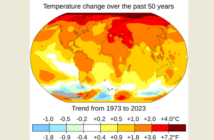
In early October, the Intergovernmental Panel on Climate Change (IPCC) released its latest report, which confirmed that humanity has around one decade to keep global temperature increases to 1.5 degrees Celsius.
Within hours of the conference, William Nordhaus became a co-recipient of the Nobel Prize for economics due to his work that describes how climate and the economy interact. His work further demonstrated how a universal price on carbon might be the most efficient way to reduce the damages due to climate change.
The carbon tax has become the Nobel prize winning idea that can potentially save the environment and our lives.
The Report:
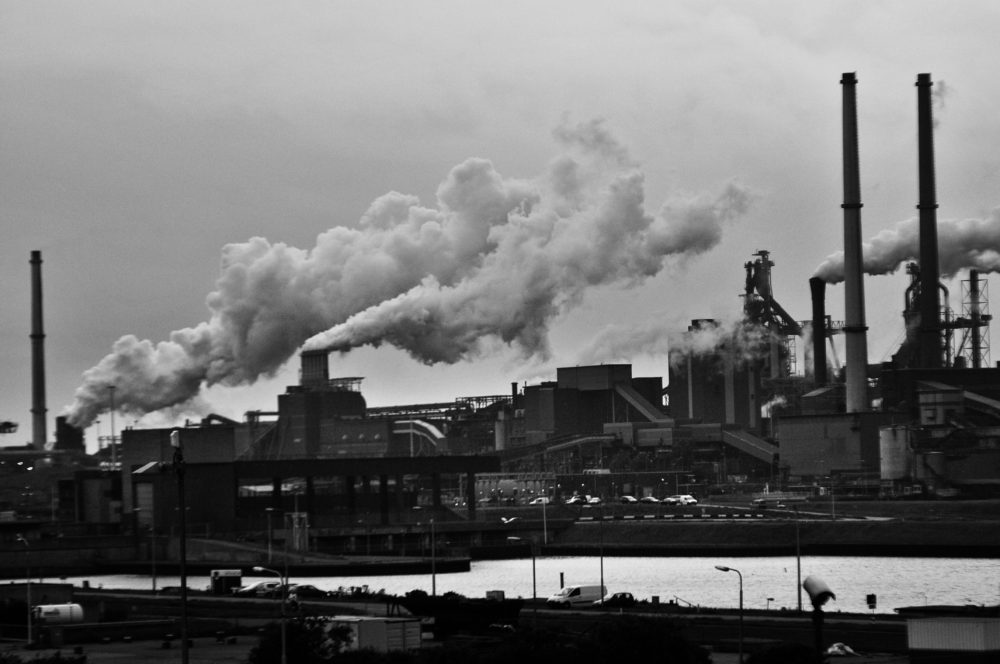
The report is clear: climate change is happening, and it could become very costly. To hold global temperatures to 1.5 degrees above preindustrial levels, we must cut greenhouse gas emissions 45 per cent below 2010 levels by the year 2030. They must become carbon neutral by 2050.
The report also shows that it is costly to overshoot the 1.5 degree target under the Paris Agreement. At the two-degree level, there is poorer air quality and there is increased risk of air borne diseases. There is also increased risk to infrastructure, rising sea levels, fisheries, coastlines, and warmer temperatures are overall much more costly to the natural world.
The Nobel Prize Research:
The research shows that a global uniform carbon tax is the best solution to avoid these potential issues. According to the researcher, a global uniform carbon tax is the most efficient way to avoid these potential detriments.
He believes that economic incentives can drive the innovation required for a sustainable economy.
Is This Feasible?
The adoption of carbon pricing is increasing. More countries are getting on board each year, including China and Mexico. Ten states in the US are already using carbon pricing.
The Carbon Pricing Debate in Canada:
In Canada, the debate on carbon pricing continues. Canadians are sceptical about introducing something that could very well affect their businesses. At the same time, federal commitments for reduction are high.
How Carbon Pricing Will Work by Province:
The federal government has ordered all provinces to put a price on carbon emissions by 2019. Currently, Quebec, Alberta, and B.C. have carbon taxes since it became a federal priority. Three of the other seven provinces are working to develop systems to meet the government’s criterial, which will take affect next year. The federal government is imposing carbon pricing plans on the other four provinces because their systems are not considered up to appropriate standards to combat emissions.
Under this plan, over 70 per cent of households will receive additional money in rebates than they will spend on carbon pricing. We wonder what the future of carbon taxing will be like!
Related: