Limited driving range between recharging cycles – and shortage of recharging stations deters many wannabee electric car buyers. Therefore manufacturers have been trying to respond to range anxiety by installing more powerful lithium-ion batteries. Now talk on the streets is Nissan is bringing a new Leaf battery to market with ‘active thermal management’. This will likely be one or other means of managing thermal runaway.
The Simplest Way for Managing Thermal Runaway
Each cell in a lithium-ion battery contains flammable electrolyte. This is the liquid membrane through which chemical ions pass between electrodes. Thus if a single cell short-circuits this electrolyte can catch fire and burst through battery cell walls.
The simplest way of managing thermal runaway is therefore placing protective material between battery pack and chassis, according to Machine Design. Because occupants in an electrical vehicle need time to escape before temperatures rise to above 1,832°F (1,000°C). Thermal runaway occurs when the fire spreads through the battery via other cells. However, there is no global regulation to manage this.
The Next Best Way is Protective Layers within Batteries
Thermal insulation lowers the risk of fire spreading to adjacent modules. This allows emergency personnel more time to remove electric vehicle occupants after a collision.
In an ideal world we should see thermal insulation between individual cells. However, there are space constraints to doing so, given the average EV battery contains many thousands. Hence scientists are turning their attention to managing thermal runaway with ‘phase change materials’. These can absorb heat from exploded cells by turning from solid to liquid, or liquid to gas.
Phase change materials that change from liquid to gas are currently the preferred option. This is because they can expel heated gases through battery module vents, managing thermal runaway faster. More research is needed to tackle a problem causing electric vehicle aversion in a cautious market.
Related
Making it Harder for Batteries to Catch Fire
Scrap Metal Fire in Tacoma: Battery-Related
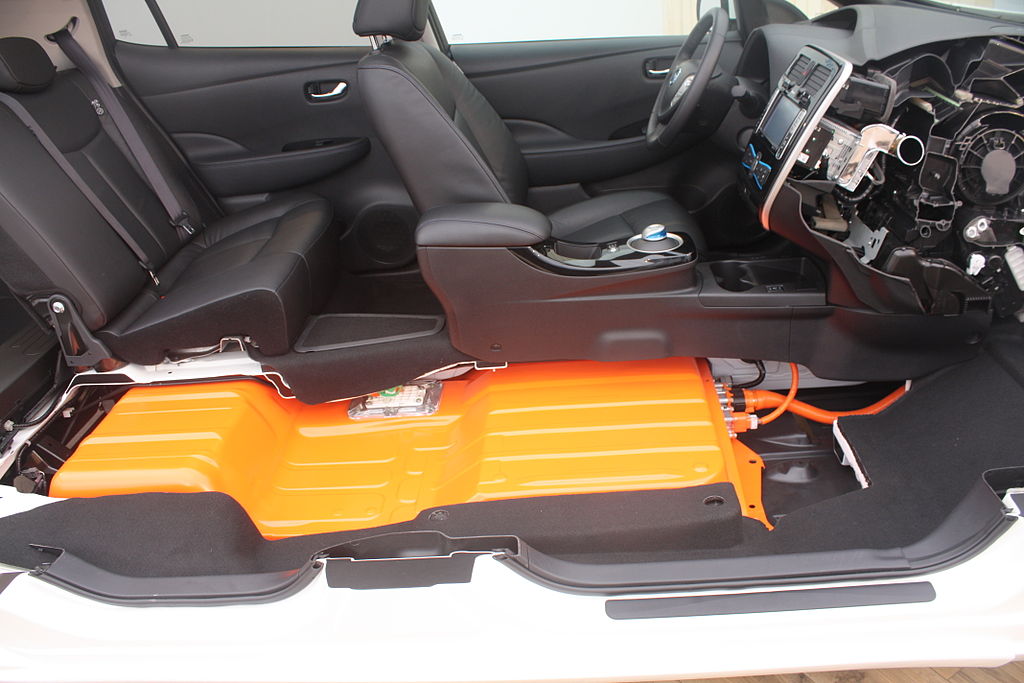
Preview Image: Nissan Leaf Lithium-Ion Battery Pack