The 2019 European heatwave in the latter part of June is one of several happening this year. It’s so bad in France that people are freezing hot water bottles and taking them to bed. Elsewhere, authorities are looking the other way as millennials strip off and dance the night away in water fountains in parks. However, the 2019 European heatwaves’ deeper warning is that we can expect more to come.
One Degree Warmer Makes the 2019 European Heatwaves Worse
Northern European heatwaves occur periodically when high atmospheric pressure draws up hot air from Northern Africa, Portugal and Spain. In this instance, exceptionally hot air from the Sahara caused the unusually high temperatures behind the 2019 European Heatwaves.
Moreover, clear June summer skies have worsened the situation by drying out the soil causing less cooling evaporation. Weather experts say we may expect more heatwaves in the future, as global temperatures rise. In fact, this is one of the most predictable consequences of our planet warming. “Now when we get a heatwave, it is likely to be a degree or so more,” a leading climatologist told the BBC News channel.
Compare 1899 to 2018 Temperatures Against the Average
How to Avoid the Worst Effects when Caught Out in a Heatwave
Heatwaves can be dangerous, especially when we are caught out in the open. They cause dehydration limiting our body’s ability to regulate our temperature. Infants and older, more vulnerable people (and those with cardiac, kidney, and respiratory diseases) may suffer fatal consequences if overnight temperatures do not drop below 77ºC / 25º F.
You must take action fast if you experience headaches, dizziness, loss of appetite, nausea, or excessive sweating in a heatwave. Cramps, fast breathing or intense thirst are also signs your body’s self-regulating systems are struggling to cope. People living in Australia, North Africa, and the Middle East have their own ways of dealing with heatwaves.
They wear loose-fitting, light-color clothing, drink extra liquid, take frequent cool showers, and carry a cloth to dry their faces. At night they sleep between thin cotton sheets, with the windows open so the cooler air can return their systems to balance.
Related
Climate Change Makes Heatwaves More Likely
Record High Temperatures Around the World
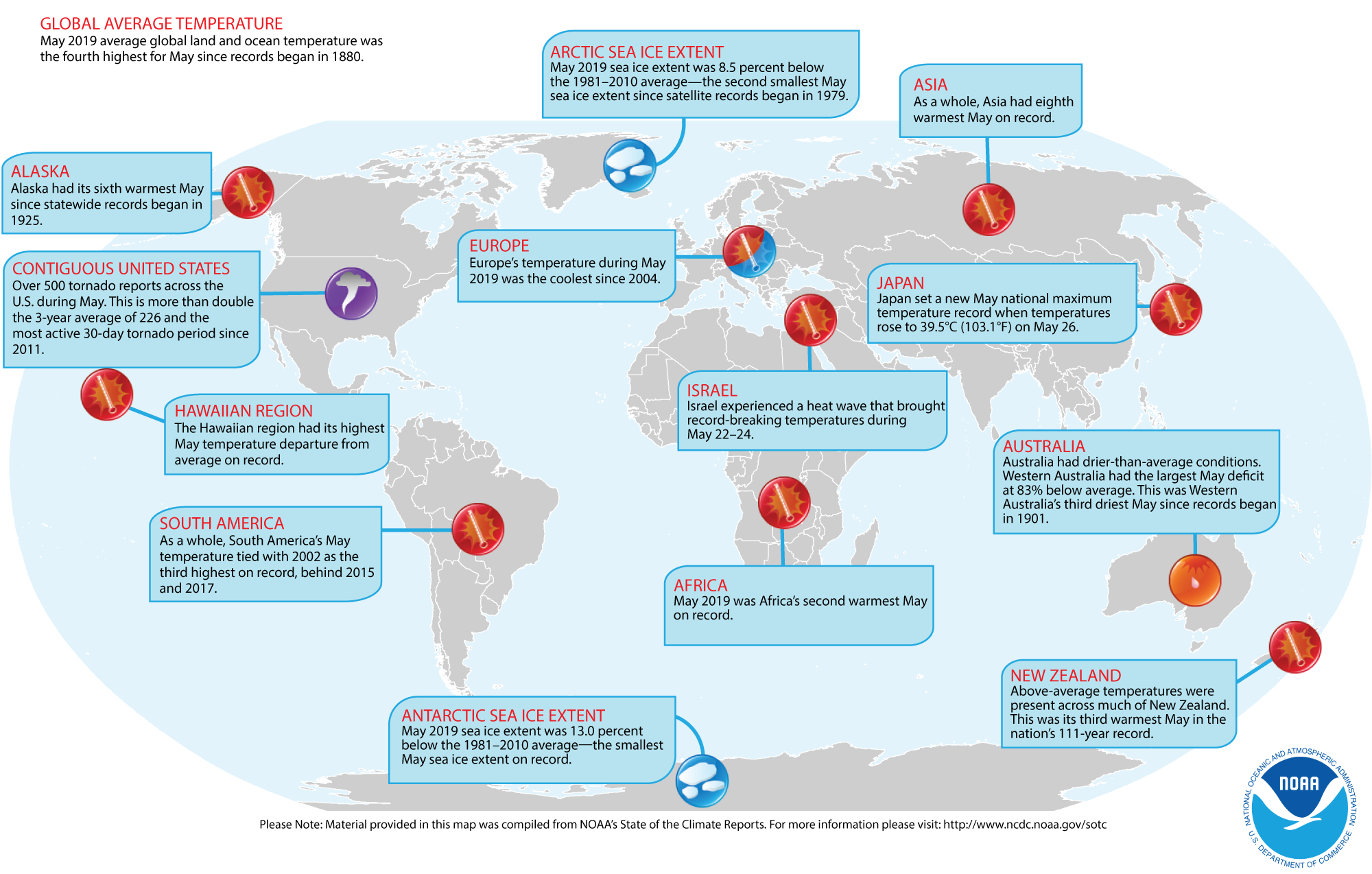
Preview Image: Selected May 2019 Climate Anomalies (NOAA)
Video Share Link: https://youtu.be/_4tpBGk21Mc