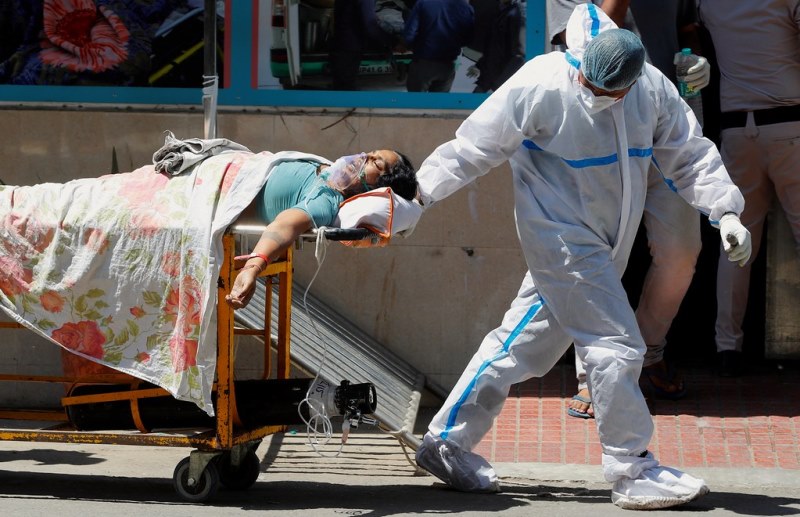
If we ever needed proof COVID-19 is a mortal threat, then we should have it now. If we had still been wondering if we needed the vaccine, then now we should be convinced. That’s because of the way New Delhi exposes the virus dark side. It shows through the brutal eye of still photography what happens if we ignore the deadly threat.
The Mind-Bending Statistics Behind The Indian Surge
What’s happening in New Delhi is a microcosm of greater India. The human toll accounts for nearly half of all new cases in the global surge, according to New York Times on April 24, 2021. Health care resources can no longer cope with the demand for intensive care and oxygen. The authorities may be losing touch with the true death count.
Millions of people are too terrified to step out doors, and face the risk of encountering other people gasping for air. Cremation services are rudimentary in the unseemly haste to dispose of the infected bodies. Sure, the new variant is accelerating the surge. But a spate of unprotected religious festivals, and political rallies have taken their toll too.
New Delhi Exposes the Virus Dark Side in North America
There are still far too many North Americans dithering whether they should have the vaccine. Moreover, there are still far too many North Americans refusing to wear face masks in public, because of the inconvenience. Many of them believe they have a right to attend unprotected religious gatherings and political rallies.
We may not be seeing the whole truth while New Delhi exposes the virus dark side. New York Times suggests political expediency may be fudging the numbers. And grieving families may be hiding Covid deaths as well, out of shame, believe it or not.
‘It’s a complete massacre of data,’ says Bhramar Mukherjee, an epidemiologist at University of Michigan following India closely. ‘From all the modeling we’ve done, we believe the true number of deaths is two to five times what is being reported.’
Related
Proof of COVID Vaccine Efficacy Stacking Up
US COVID Vaccine Tipping Point Ahead
Preview Image: Health Worker with Coronavirus Patient