The Delta India COVID-19 variant (Virus B.1.617.1) is the fourth evolution that World Health Organization lists as being of concern. This means it is more infectious than the parent version that first emerged in China. And it has potential to diminish the effectiveness of public health and social measures – or available diagnostics, vaccines, and therapeutics. Today, we share a thought piece by Journal Nature detailing what we already know about Delta India COVID-19 to date.
Virus B.1.617.1 Is Spreading to Other Countries
Virus B.1.617.1 – the Pango lineage that traces the variant evolution – is in other countries besides India. These include United States, Singapore, and United Kingdom where it dominates in several regions.
Researchers are racing to discover what we what we do not yet know about Delta India COVID-19. That’s because they urgently need to understand the B.1.617.2 and B.1.617.3 varieties, each with its own slightly different genetic make-up.
Those scientists are following the genome sequencing trail by linking to variants they understand better. This helps them relate them to patient symptoms, and vaccination statuses. However, this is a long process and they know we may not have the luxury of time.
What We Know Now About Delta India COVID-19 to Date
We may not understand the chemistry fully yet. However, Nature Journal confirms the variants have individual properties that alter the spike protein acting as the infection bridge. But fortunately the sub-variants do have their own individual markers that make it possible to track them.
However, the greatest challenge is to know how effective our current vaccines are against the variants. That’s because, if they are able to bypass that immune protection, they could trigger significant new waves of infection. And derail plans to relax lock downs and other restrictions according to Journal Nature.
Related
Two Jabs Effective Against Indian Variant
India’s Covaxin Effective Against 617 Variant
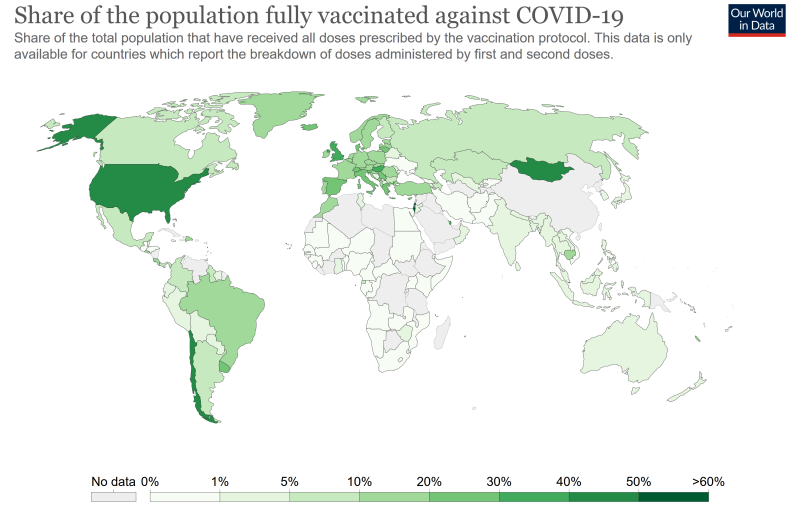
Preview Image: Population Fully Vaccinated