The more infectious Delta variant is making its presence felt in North America, as experts warned it could. There’s no solid indication to date it is more deadly. However, it does spread faster. Therefore we need to take extra care for the next few weeks, to contain the spread. So if we do need to go to hospital, the beds will be there.
High Risk Areas in United States Need Extra Attention
American states with low population antibody counts need to take extra care for the next few weeks with increased focus on Delta. That’s especially the case if they have a combination of low vaccination and historic infection rates.
Former Food and Drug Administration Commissioner Scott Gottlieb told CNBC Friday most parts of the country are ‘relatively safe’. However, the Hill and other media suggest the following four states ‘potentially signal an upcoming increase in hospitalizations and deaths’
1.. MISSOURI has seen its average daily case count increase 55% in the past two weeks.
2… The ARKANSAS case count was on par the past two weeks with its highest level since winter.
3… NEVADA has seen cases rising since mid-June. It recorded a 48% increase in a single week.
4… In UTAH, a similar pattern has been playing out. The past two weeks saw an overall 33% case increase.
Extra Care for the Next Few Weeks is the Key to Containing This
The coronavirus needs the cooperation of people in order to survive and spread. If there were no new infections for two weeks, then the pandemic could be ‘done and dusted’ in the U.S. Now while that’s unlikely, the people in those states and elsewhere could make a remarkable contribution quite easily.
All that’s needed is to put other people first, and protect each other by taking precautions just in case we have an infection. It’s a simple matter of wearing masks and distancing wherever we can. Just imagine how good we would feel if we could say ‘we cracked the code together’.
Related
WHO Warns of a Third Europe Wave Looming
Where You May Be at Risk from Delta in US
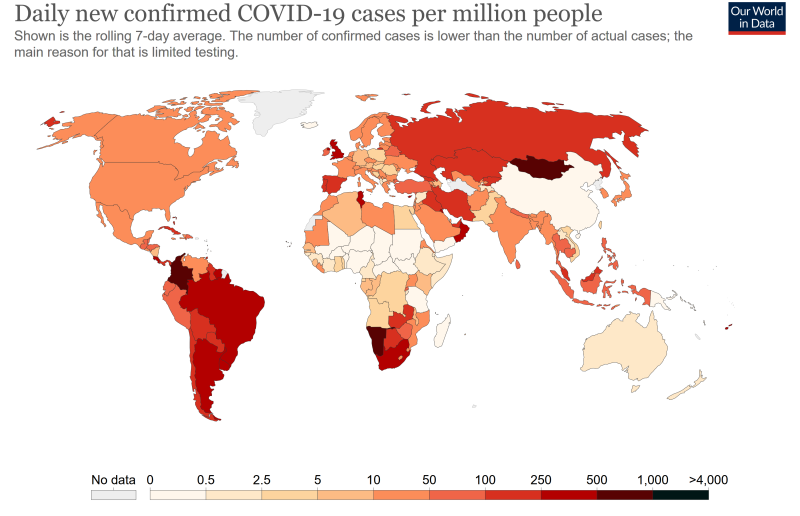
Preview Image: U.S. Daily Cases per Million Compared