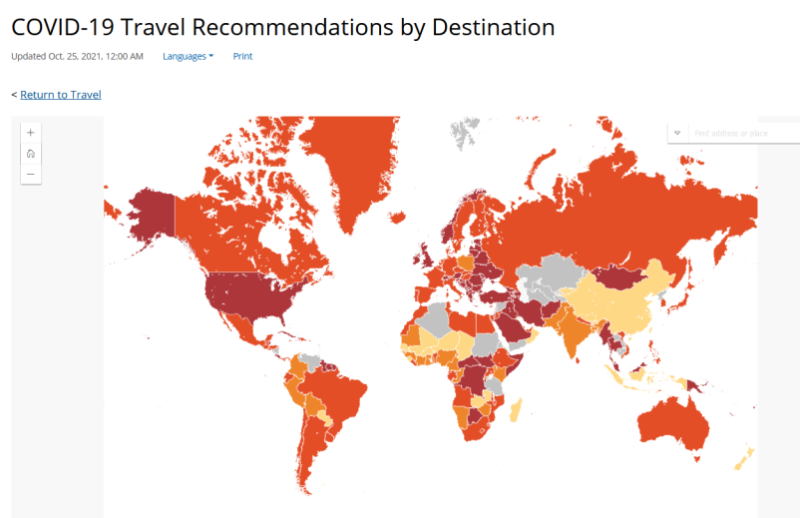
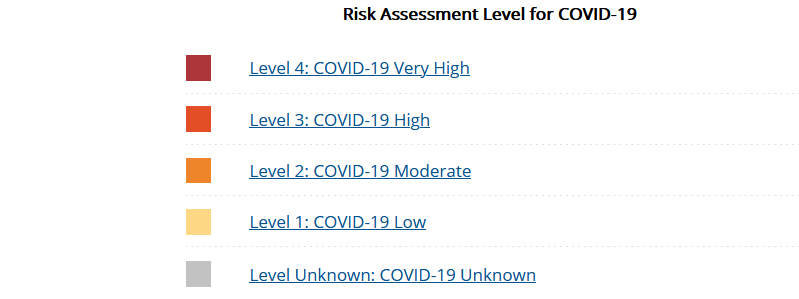
U.S. Centers for Disease Control (CDC) cautions against letting our guard down, and traveling as we did before. We imagine this is because we are encountering new environments unfamiliar to us. And moreover, the COVID-19 hygiene standards and public participation may not be as we expect. Travel at your own risk during COVID-19, CDC said on October 25, 2021. We might be well-advised to follow this advice.
What to Consider Before Traveling Internationally.
1… First, do not travel internationally unless you are fully vaccinated.
2… Then check the COVID status and policies at your destination(s).
3… Research entry and exit policies at international portals there.
4… Research any current COVID-19 mandates in those places.
5… Finally, ask your carrier for details concerning rules while on board.
Then make a conscious decision. Will you be willing and able to comply with COVID-19 policies on your journey, and at your host destination(s)? If not, it could be wise not to go there.
Reducing Our Risk from Travel During COVID-19
Centers for Disease Control advises against traveling if we have recent exposure to the coronavirus, unless we have full vaccination. This makes sense too. We don’t want to end up in a foreign hospital where we don’t speak the language.
They say we should also rather stay in familiar circumstances, if we recovered from an infection less than 90 days before. Those are the main points to remember if we want to reduce our risk from COVID19 while we travel.
But we also owe it to our fellow travelers, and the folk at our destination not to infect them with the virus either. That’s why Centers for Disease Control says we should not travel if we are sick. And most certainly not if we tested positive, and have not completed our isolation. Or are awaiting the results of a COVID-19 test.
Breaking News
Visitors to United States Now Require Vaccines
COVID Indicator That Rates Risk from the Virus
Preview Image: CDC Travel Recommendations