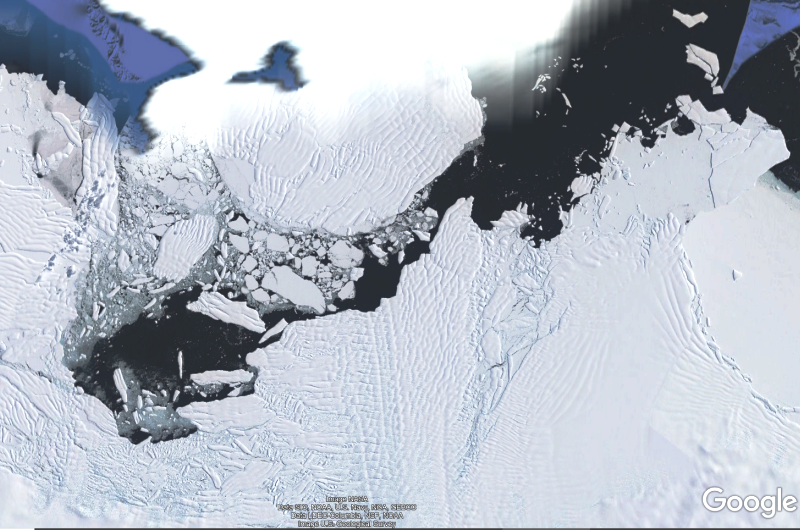
Thwaites Glacier is a sheet of Antarctic Ice roughly the size of Florida. It supports life systems of planetary importance, while acting as curator of a vast store of life-giving water. As Thwaites melts at an alarming rate, it makes visible the invisible fact our planet is warming steadily. Now, scientists are asking could one ice sheet affect the entire food chain.
How Could One Ice Sheet Affect Entire Food Chain?
The food chain represents the way organisms relate by eating and being eaten by each other. Plants and simple organisms support the base. Apex predators dominate the peak. These include humans, whales, penguins, seals, albatross, and other seabirds in Antarctic. Then there are also decomposition species for example fungi and bacteria.

Everything appears to have been functioning well until humans arrived, and started exterminating species as a result of their lifestyle. Patricia Yager is a professor at Department of Marine Sciences at the University of Georgia. She decide to explore the impact of melting on the food chain, and shared her conclusions with CNN Weather.
Everything in the Ecosystem Is Being Impacted
“There’s a lot of melting going on,” she told CNN weather. “Lots more than I expected. There was more melt water and more heat in that ocean than I imagined. This is very worrisome because of the sea level rise it could cause.
“But it’s more than that. What we realized as biologists and chemists and ecosystems scientists was, our ecosystem was also being impacted. The concentration of salt in the surrounding water will dilute with fresh glacier water.
“Everything from small phytoplankton to the larger seals and penguins will feel the effect.” Changes at lower levels of the food chain ripple through the system. Is the Antarctic sufficiently remote from us we no longer seem to care?
Breaking News
Solar Impulse 2’s Orbital Satellite Role
European Battery Opportunities Are Booming
Preview Image: Thwaites Glacier on Google Earth