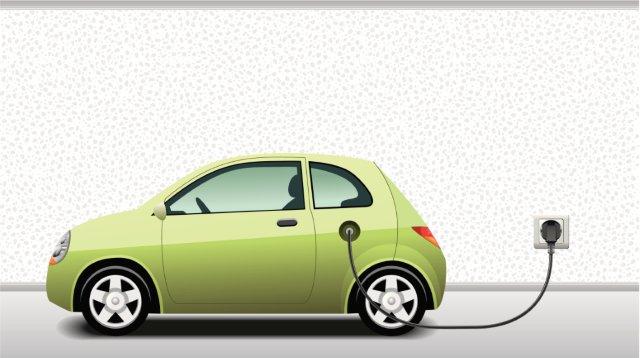
In 2013, sales of electric vehicles (EV) nearly doubled. However, most of them won’t take you farther than 100 miles on one charge. To boost their range toward a tantalizing 300 miles or more, researchers are reporting new progress on a “breathing” battery that has the potential to one day replace the lithium-ion technology of today’s EVs.
“Lithium-air batteries are lightweight and deliver a large amount of electric energy,” said Nobuyuki Imanishi, Ph.D. “Many people expect them to one day be used in electric vehicles.”
The main difference between the two batteries is that the lithium-air batteries replace the traditional cathode, a key battery component involved in the flow of electric current, with air. That makes the rechargeable metal-air battery lighter with the potential to pack in more energy than its commercial counterpart.
Even though lithium-air batteries have been hailed as an exciting new technology to watch, they still have some problems that need to be worked out. Researchers are forging ahead on multiple fronts to get the kinks worked out before they hit the market.
The batteries’ electrolytes are one of the main components that researchers have found themselves working on. The electrolytes conduct electricity between the electrodes. There are currently four electrolyte designs, one of which involves water. The advantage of this “aqueous” design over the others is that it protects the lithium from interacting with gases in the atmosphere and enables fast reactions at the air electrode. The downside is that water in direct contact with lithium can damage it.
After seeing the potential of the aqueous version of the lithium-air battery, Imanishi’s team at Mie University in Japan tackled this issue. Adding a protective material to the lithium metal is one approach, but this typically decreases the battery power.
So they developed a layered approach, sandwiching a polymer electrolyte with high conductivity and a solid electrolyte in between the lithium electrode and the watery solution. The result was a unit with the potential to pack almost twice the energy storage capacity, as measured in Watt hours per kilogram (Wh/kg), as a lithium-ion battery.
“Our system’s practical energy density is more than 300 Wh/kg,” Imanishi said. “That’s in contrast to the energy density of a commercial lithium-ion battery, which is far lower, only around 150 Wh/kg.”
The battery showed a lot of promise, with high conductivity of lithium ions, and the ability to discharge and recharge 100 times. In addition to powering EVs, lithium-air batteries could, one day, have applications in the home,thanks to their low cost. Power output remains a big hurdle, but Imanishi said his group is committed to honing this approach, as well as exploring other options, until lithium-air becomes a commercial reality.
At UPS Battery Center, our goal isn’t to only sell batteries, we want to inform and teach you about the amazing world of batteries, electricity and energy. Please check back for more interesting, helpful and informative articles about batteries and electricity.
Related Articles:
New Electric Cars: Drivers Optional
Researchers Develop Technology to Estimate Range of Electric Vehicles
Structural Batteries To Lighten Electric Vehicles
Effect of Electric Vehicles on California’s Electricity Grid
A Brief History of Electric Vehicles