Electric car engineers have always wanted to solve the problem of weight in batteries. For the longest time, bigger and heavier battery have been used for vehicles that need to go over long distances, since they can afford to supply the needed energy to complete the trip.
This quality in a battery can be a problem for electric vehicles intended for the mass market. There is only so much weight that can be placed in a car. This means batteries will really have limited energy storage capacities. Families going on road trips will have to keep on charging their cars to reach their destination and back. Not only is it time consuming, it can be costly as well. It is just not something that will appeal to the majority of car consumers.
But it seems that this problem is about to be solved. According to an article published on Science Daily earlier this month, engineers believe that the problem might be solved by structural batteries. Instead of having a big and bulky battery in the engine, some parts of the battery will be integrated into the body of the car itself.
This solution was discovered by researchers at the Swedish KTH Royal Institute of Technology. They are looking at carbon fibre to accomplish two functions: become a lightweight reinforcement for the body of the car and, a lithium ion battery electrode. One of the researchers, Eric Jacques, revealed that their objective was to come up with a structural battery that will consist of lightweight materials that can perform multiple functions. It should be able to manage mechanical loads while storing electrical energy. This should solve the problem with weight in electric vehicles.
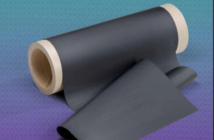
The researchers believe that carbon fibre is a better option than graphite. The former is also a good conductor and it allows lithium to be inserted in its microstructure. The mechanical properties that it has might just be what we need to enhance the performance of electric cars without making them heavier.
So far, the results of their experiments have yet to reach completion but the researchers are confident about the current results. The article mentioned that if this development is successful in electric cars, it could be applied to other devices like mobile phones, etc.
Related Articles:
New Dual-carbon EV Battery Chemistry Breakthrough
Infographic: Lithium-Ion Battery
What is a Lithium-ion polymer battery?
Electric Cars Do Not Pose Elevated Risk of Cancer from Electromagnetic Fields, Experts Say