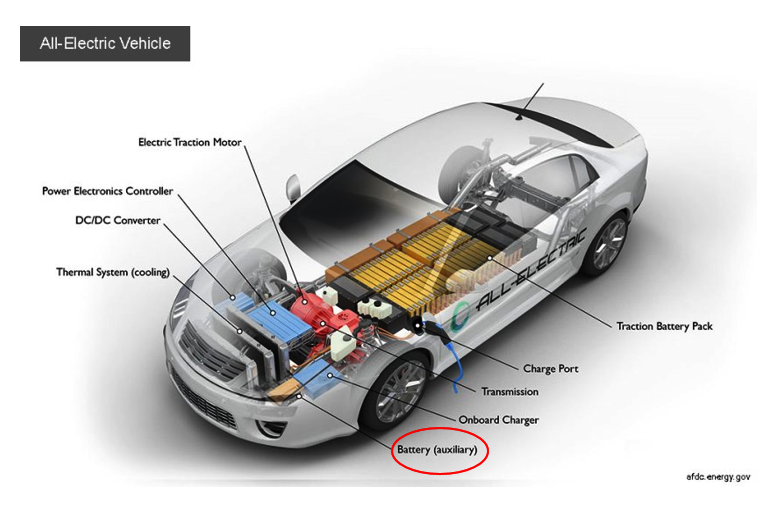
Electric vehicles have two separate battery systems. The first of these are the high-voltage ones that energize the driving wheels. But they also have a secondary, auxiliary electric vehicle battery that powers their accessories. This is usually a less powerful twelve-volt system.
This is a necessary condition during the transition from internal combustion to electric vehicles. By way of explanation:
- Internal combustion vehicles generally use twelve-volt battery electricity.
- EV propulsion batteries use higher voltages that can damage sensitive electronics.
- Most electric vehicles are still only hybrids, and therefore have electric starters.
- They are still evolving from conventional vehicles and they share many features.
- Using the same lower voltage means automakers can use the same accessories.
Two Platforms: One Auxiliary Electric Vehicle Battery
There are two main electric vehicle types on the market nowadays. We describe them briefly as follows:
- Hybrid-electric versions supplement internal combustion engines.
- Fully-electric vehicles replace combustion with batteries and motors.
Both of these varieties share the same electric accessories with gasoline-powered vehicles. It therefore follows that the auxiliary common-voltage electric vehicle battery will be with us for quite a while longer.
How the Demand for Auxiliary Power is Growing
Brake and Front End website provides technical information for servicing and diagnosing under-car components. They note we are in an era of change, in terms of vehicle data connectivity, autonomous driving, and vehicle electrification.
Each of these aspects requires additional onboard auxiliary power. Brake and Front End believes exceptional levels of change await us. This increased demand will not only come from heated seats and infotainment systems. It will also bring cutting edge safety features like pedestrian detection systems.
The ongoing, vital role that auxiliary electric vehicle batteries play demands reliable, safe batteries that are also environmentally responsible. Lead-acid batteries not only help save energy, and cut vehicle pollution. Did you know that some 99% of their components are already recycled in the U.S. today?
More Information
Early Hybrid Electric Cars In Context
The Future Life of Our Lead Acid Batteries