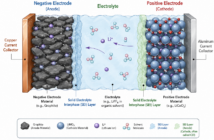
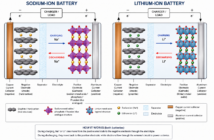
The active materials in the batteries we know are the two electrodes. These play a critical role in electro-chemical reactions, by accepting, storing, and releasing ions. They also interface directly with the electrolyte between them. This relationship makes the coatings on battery active materials critical.
Coating Technology Is Critical for Battery Performance
Reliable, rechargeable batteries are critical to the success of the global drive for renewable clean energy. And yet, despite this, their ability to continue performing longer remains a challenge.
A utility cannot rely exclusivity on batteries, unless their chemical integrity, energy capacity, and safe operating temperatures are guaranteed over many cycles. In reality, these capabilities gradually degrade. However, suitable coatings on battery active materials can help delay this decay.
There are several factors that encourage premature degrading of active materials. Here we think of reactions between battery electrodes and battery electrolytes. Other negative influences include physical electrode deterioration, and presence of gases.
Beneficial surface coatings on active materials can stabilize their interfaces with battery electrolytes. They can suppress parasitic reactions like dendrites, and generally enhance the resilience of active materials.
Surface Coatings on Battery Active Materials
Various strategies are available to delay battery degradation. Popular examples include nickel-rich cathodes, graphite / silicon anodes, and lithium metal coatings.
Other, ‘wet’, options include coating electrode surfaces to improve reactions between electrodes and electrolytes. These coatings on battery active materials are the direction in which research is moving. They are microscopic layers, often thinner than a single strand of human hair.
The key has become balancing battery performance, cost, and ability to scale up to full production. The future direction of this work includes protecting the natural environment from harmful chemicals.
More Information
Sulfide Coating Boosts NMC811 Cathode
Thin-Film Coatings on Solid State Batteries