We wrote a while ago about how Japan’s moon lander SLIM had a bouncy landing, and ended upside down. This was bad news as the lander relied on sunlight to power its batteries, and the solar panels faced the wrong direction. The tiny spacecraft shut down as the two-week-long lunar night descended, with just 12% of battery power remaining.
Japan’s Moon Lander SLIM Sleeps for Two Weeks
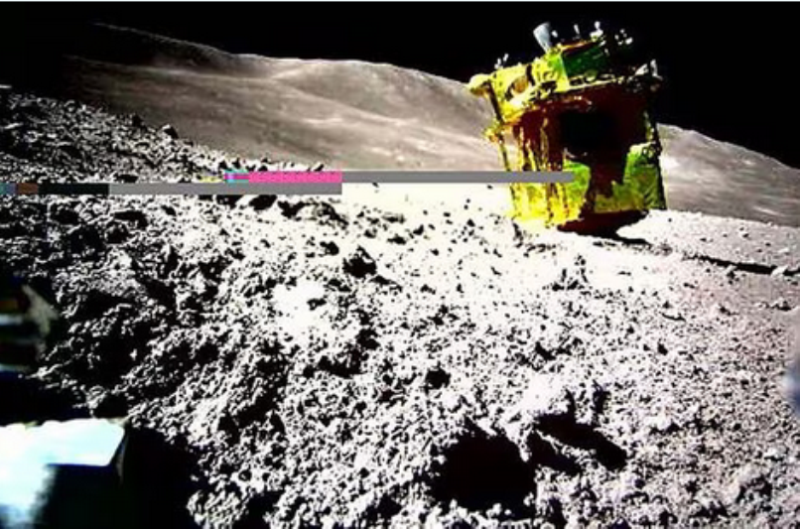
The ‘anomaly’ during the landing meant SLIM had just enough energy to transmit a mosaic image of its landing site. However, its two mobile rovers had settled better. They sent images of SLIM lander resting on its nose, and unable to replenish batteries in the remaining sunlight.
Temperatures plummeted to minus 208 degrees fahrenheit during SLIM’s 14-day sleep. There was no heating system on the lander either, to save weight and because the primary mission was to achieve a soft landing.
There was therefore no certainty the batteries and electronics on Japan’s moon lander SLIM would be able to wake up. And then miraculously they did, as the first light of lunar day recharged the batteries. Japan’s Aerospace Exploration Agency was ecstatic over the bonus time to explore the environment.
Fresh Hope as Lunar Day Wakes SLIM
The SLIM lander did not have protection against the cold lunar night. Yet it did respond when mission control fired off a command. This response revealed that communication facilities were still functioning, meaning that the batteries and electronics survived the cold.
Japan’s moon lander SLIM captured a few images during this window of opportunity, including some views not previously visible. However, the daytime temperatures were greater than mission control anticipated at 212 degrees fahrenheit, and so they paused the session.
Scientists back on earth are absorbing this unexpected information. They are ‘excited about the possibilities for further observations’, but have not yet decided when to activate the lander again.
More Information