China Daily reports that a team at Chinese Academy of Sciences’ Dalian Institute of Chemical Physics invented a new cold-temperature lithium-ion battery. Their article appearing on March 7, 2024 is the only information we could find on the subject at the time of writing. Nonetheless, this appears to be a discovery of potential global significance.
Why Is This Cold-Temperature Lithium-Ion Battery So Significant?
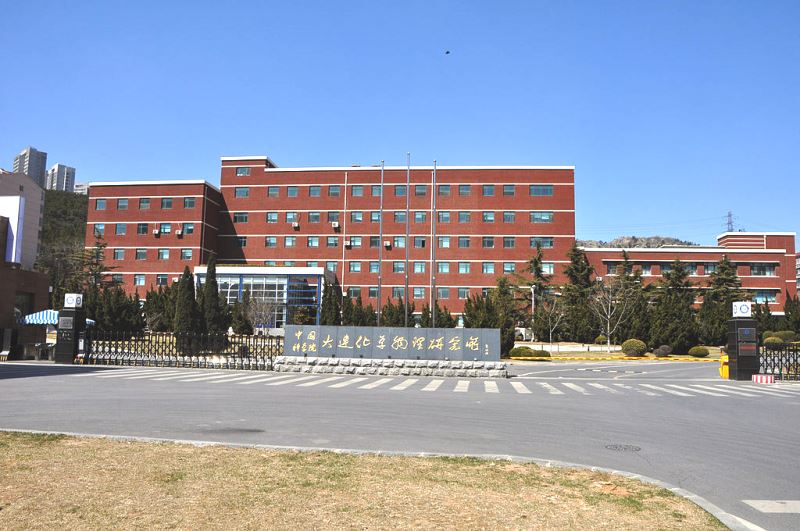
Dalian Institute of Chemical Physics focuses on physical chemistry, chemical physics, biophysical chemistry, chemical engineering, and materials science. It encompasses a national laboratory, two state key laboratories, and five national engineering research centers.
The prototype battery in question delivers 260 watt-hours density per kilogram, at temperatures as low as -76º F / -60º C. This confirms it is able to store a significant amount of energy proportional to its volume and weight. A battery operating reliably like this, could have major benefits for electric vehicles in cold environments.
“This battery exhibits remarkable endurance,” Chen Zhongwei, head of the State Key Laboratory of Catalysis at the Institute, told China Daily. It retains over 80 percent of its capacity after 500 cycles at a wide range of temperatures.”
However, developing this new cold-temperature lithium-ion battery did not come about by accident or by chance. The team at Dalian Institute of Chemical Physics worked long and hard to develop their far-reaching solution.
How the Dalian Institute Team Achieved Their Break Through
The Dalian team addressed two key aspects of lithium-ion battery technology in producing their prototype:
- First they developed a novel composite electrolyte, enhancing the flow of ions in the battery.
- Then they derived a multi-layer composite electrode structure, plus a new semi-solid electrolyte.
Their prototype cold-temperature lithium-ion battery exhibits another benefit over those we already mentioned. The semi-solid electrolyte is less likely to leak out and catch fire, making it a safer option.
China Daily reports that this project is ongoing. The next step is to develop a new generation with an even wider operational temperature range, and a density exceeding 260 watt-hours per kilogram.
More Information
Condensed Matter Semi Solid State Battery