Marine transport across oceans, up and down rivers, and through inland waterways is carbon intensive. Its contribution to emissions could reach 10%, as land transport shifts to renewables. However, shipping is the backbone of international trade, as Transport Environment points out. The International Maritime Organization came on board in 2023, when it agreed to phase out carbon by 2050.
Marine Transport In The Busy Solent Strait
The twenty-mile-long Solent Strait lies between the United Kingdom and the Isle of Wight, and narrows to one mile at one point. But the coastal waterway also laps the shores of the major ports of Portsmouth and Southampton, making it an important marine transport route.
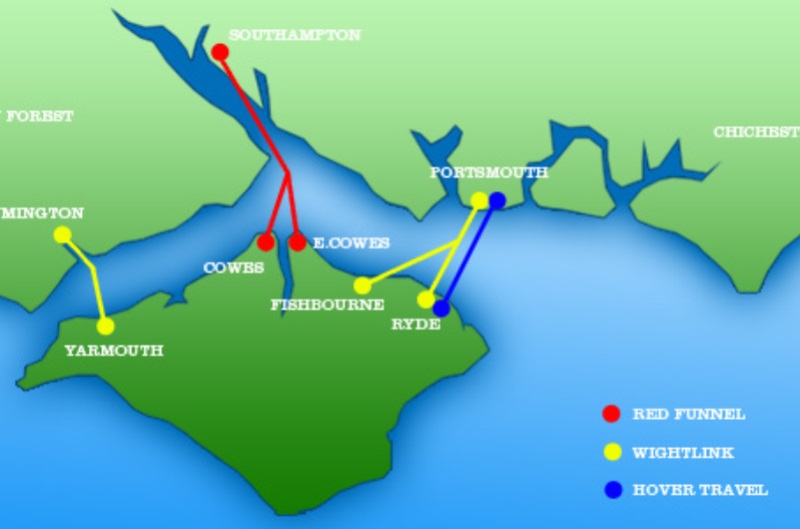
The Isle of Wight is a holiday destination for vacationers and day trippers from United Kingdom. However, the island has no passenger airport, let alone a motorway. Passenger and car ferries are the sole link to the mainland, including the only remaining passenger hovercraft service in the world.
New Zero-Emission, Electric Isle of Wight Ferry
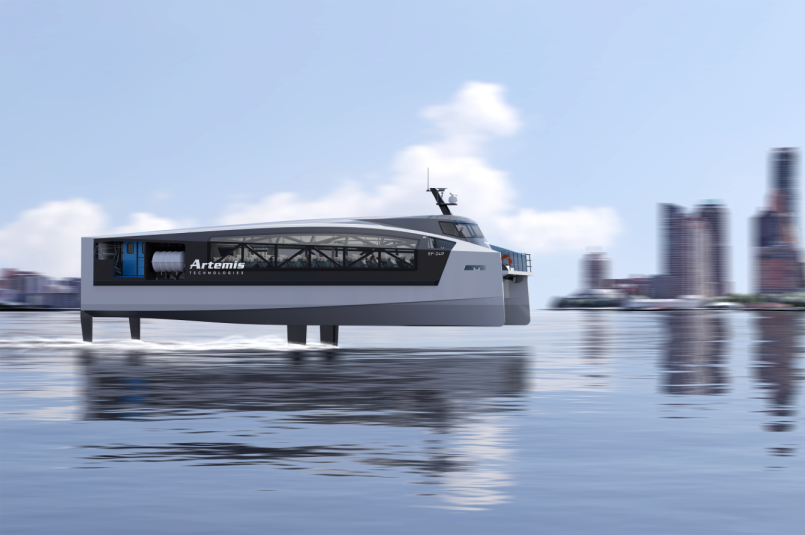
BBC News confirms a significant development in Isle of Wight ferry services. A ferry company operating there has announced construction of an ‘electric foiling ferry’. We learned this is a revolutionary watercraft ‘that combines surfing, hydro-foiling, and electric propulsion.
The ship builder’s website confirms the battery-power propulsion will fast-charge in less than one hour. This should allow an uninterrupted electric ferry service in terms of current schedules, we understand. And, the website continues, there should be far fewer maintenance outages than with diesel.
Lifting the hull above the water onto foils will reduce friction, save battery power, and provide a smoother journey. The ship builder reports that the ferry will accommodate 150 passengers, and reach a top speed of 41 miles-per-hour. We will be sure to hitch a ride on one, if the opportunity arises.
More Information
eWolf All-Electric Tug Now Doing Sea-Trials