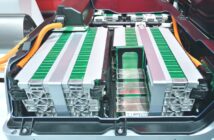
A potassium-ion battery is conceptually similar to its lithium-ion stablemate, except it uses potassium-ions. A president of the American Nano Society invented the design in 2024. But since then the idea went dormant, and disappeared from news pages. Until, that is, a commercial version arrived.
How Does a Potassium-Ion Battery Work?
The original prototype battery had a potassium anode, and used a highly electro-chemically stable prussian blue compound for its cathode. The trial battery successfully charged and discharged more than 500 times.
However, the idea almost went dormant as lithium-ion batteries seized the market, and the people’s imagination. Although scientists continued tinkering with the concept in laboratories, including developing graphite anode alternatives.
But the instability of the liquid, ionic electrolyte has continued to impede bringing a commercial potassium-ion battery to market. You see, the available liquid electrolytes are flammable, and achieve poor cycling performance.
However, Wikipedia reports that solid, polymer electrolytes for all-solid-state versions offer flexibility, and enhance safety. Using a more abundant metal than lithium suggests this could be a cheaper, and potentially faster-charging alternative too.
U.S. Company Unveils First Commercial Version
Austin, Texas-based company Group 1 announced the first commercial potassium-ion battery in a press release on August 1, 2024 (see link below). Theirs are larger than AA batteries, and measure 18 mm across, and 65 mm long. Group 1 claims the following benefits for its product:
- A sustainable, efficient, and cost-effective solution compatible with lithium-ion versions.
- Free from scarce, critical minerals including nickel, cobalt, copper, and lithium.
Group 1 has provided samples to tier one original equipment and cell manufacturers, claiming ‘a significant milestone in energy storage’.
The company has deployed a ‘unique, prussian white compound’ as the cathode, while staying with a graphite anode. The 18650 battery shape it has chosen is the most widely used and designed cell format.
Group 1 claims ‘superior cycle life and excellent discharge capability’ at 3.7 volts. This could be a viable alternative for mobility applications according to the press release, and support domestic manufacturing of critical battery technology too.
More Information
Potassium Ions Charge Li Batteries Faster
Could Potassium-Ion Batteries Stabilize Grids