That headline rocked us back when we spotted it. What were we to make of the description ‘NASA designs batteries to fail’? Although, as we might have expected, there was more to it than just that.
The opposite is actually quite true! This is a project to ensure that NASA’s batteries do not fail unexpectedly. Here, NASA may be picking up on an ancient Chinese tip. This maxim holds that if you truly want to succeed, then you need a deep, objective understanding of your opponent’s capabilities.
Why NASA Needs Batteries That Do Not Fail
Clean Technica explains how NASA believes it is far better for its batteries to fail on earth, than somewhere far away in space. After all, we were only too aware of that risk of a critical battery failing, on the Artemis II moon mission.
This is why NASA has been working with National Laboratory of the Rockies for the past ten years. Part of the NASA project brief is learning how to make batteries that fail, deliberately. Now our headline makes sense!
There are several ways that serious researchers analyze battery failure, although we don’t recommend trying them:
- Abusing batteries deliberately, and measuring the strength of the reactions.
- Observing those reactions inside battery cases using advanced micro-microscopy viewing techniques.
But NASA and its associates have come up with a brilliant new idea. They are inserting devices into batteries that trigger failure by design!
An ISC-D Device Causing Batteries to Fail
NASA’s path to controlled, deliberate battery failure, involves a novel internal short-circuit device (ICS-D). The researchers insert these devices into lithium-ion battery cells in their laboratory. These trigger planned battery failure in a controlled fashion.
“The ISC-D trigger cells are our preferred method of conducting our battery test campaigns for all our manned missions,” explains researcher Eric Darcy He was the former battery technical discipline lead at NASA’s Johnson Space Center.
More Information
NASA Battery Power for Space Vehicles
Sulfur Selenium Battery Breakthrough at NASA
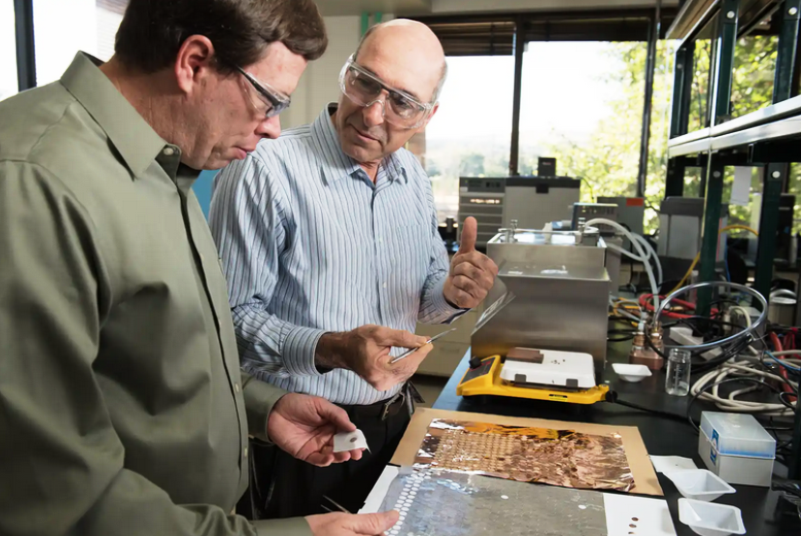
Preview Image: Creating and Assembling Disks