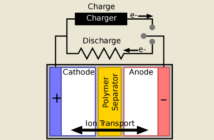
We can safety assume that electricity exists, because we can observe it powering light bulbs, electric cars, and much more. We may also have a loose thought of electrons leaving a battery, and releasing their energy as electricity. The rest may be beyond us, unless, that is, we imagine battery energy flowing like water from a faucet thorough a garden hose.
Water Energy Flowing Through a Hose Like a Battery
You may come across terms like voltage, current and resistance on this site, but remain slightly mystified despite the definitions we provide. We decided to use the water analogy this time, to help you understand those concepts from a different perspective. With that as a background, here we go ….
- VOLTAGE IS THE PRESSURE pushing energy from a battery through a device. We can compare this to pressure forcing water through a garden hose.
- CURRENT IS THE VOLUME of the energy leaving a battery in response to that pressure. The wider we open the garden faucet, the more water flows.
- RESISTANCE IS THE ABILITY of an external circuit to accept the battery energy flowing through it. A smaller-diameter garden hose has more resistance than a larger one.
Voltage Current and Resistance Are Intertwined
Voltage, current and resistance in batteries are intertwined, because if we change one, this affects the other two. When we multiply current by resistance, for example, the product of our calculation is equal to the volts.
Similarly, to continue the battery energy flowing analogy, less water leaves the garden hose when we partly kink the pipe. The pressure is the same, but the resistance is greater and so less water flows.
We hope this information helps you understand battery voltage, current and resistance at a deeper level. The yearning to optimize these factors is behind much battery research, in the ongoing journey towards better batteries.
More Information
Overall Battery Potential Determines Voltage