Ferdinand Porsche, who created his famous automobile company, was an innovative fellow by all accounts. His early interest was in electric cars that were barnstorming public attention. He also experimented with hybrid automotive technology at the turn of the 20th century. Then he switched his attention to internal combustion engines.
Porsche’s Hybrid Automotive Technology Was Revolutionary
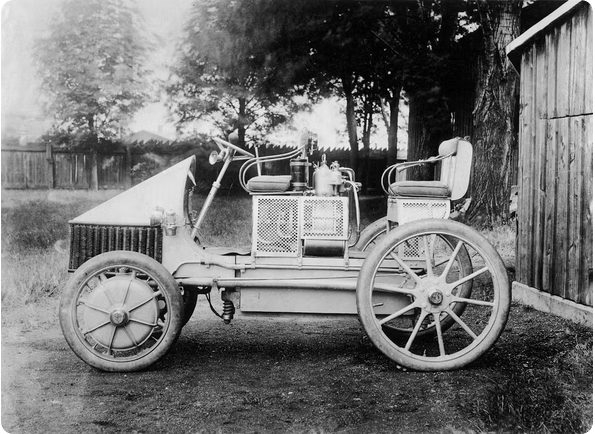
Ferdinand Porsche’s main competitor was Carl Benz, who preferred gasoline combustion engines. These had the advantage of longer driving ranges between refueling, than Porsche’s battery-electric vehicles. Porsche responded with his Semper Vivus hybrid, with an onboard generator that powered the driving wheels. Those in the know will remember that ‘semper vivus’ means ‘always alive’ in Latin, although as far as we know Porsche never dabbled in hybrid automotive technology again.
Broad Principles of the 21st Century Hybrid Car
Ferdinand Porsche’s early interest was in electric cars, until consumers forced him to change his mind. Hence his Semper Vivus still used electricity to rotate the driving wheels. That paradigm then shifted to using gasoline to do this for almost a century. Pure electric transport cannot really take off, until battery costs come down while driving range increases. Hybrid-electric vehicles offer a compromise between these two extremes, and at the very least are a step in a positive direction.
Several Hybrid Automotive Technologies on The Market
There are three degrees of hybridization available, namely Mild MHEV, Full FHEV, and Plug-In PHEV hybrid electric vehicles:
- Mild hybrids provide electrical assistance to the combustion motor, plus a limited ‘limp home’ facility.
- Full hybrids can operate independently on either battery or gasoline power, depending on the journey.
- Plug-In hybrids have longer battery driving ranges, plus a conventional engine for extended trips.
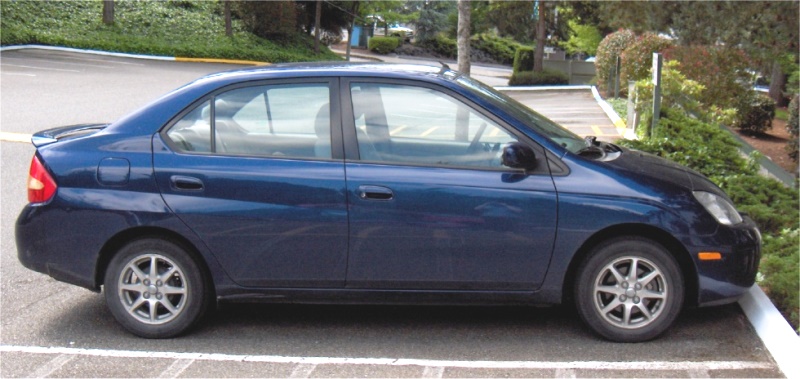
The Toyota Prius launched internationally in 2000, and proved that hybrid automotive technology was practical, and planted the principle in the developed world. It epitomizes the compromise between battery and petroleum vehicles, that will be with us for a time to come.
More Information Electric Vehicle and Hybrid Battery Review Battery Plus Two Axial Motors = Hybrid EV Preview Image: A Hybrid Parallel Vehicle Design