Scientists at Pritzker School of Molecular Engineering at University of Chicago, are following an overlooked path in battery research. Their less-traveled line of reasoning lead them to tweaking textures on negative anodes. And right now, some are saying this could be the sodium-ion breakthrough we have been waiting for.
Could Tweaking Anode Textures Really Do That?
Well, we already know that soft metals like sodium and lithium, make great negative battery anodes. Lithium holds the floor as the ultimate anode material currently, especially for high-energy, rechargeable batteries.
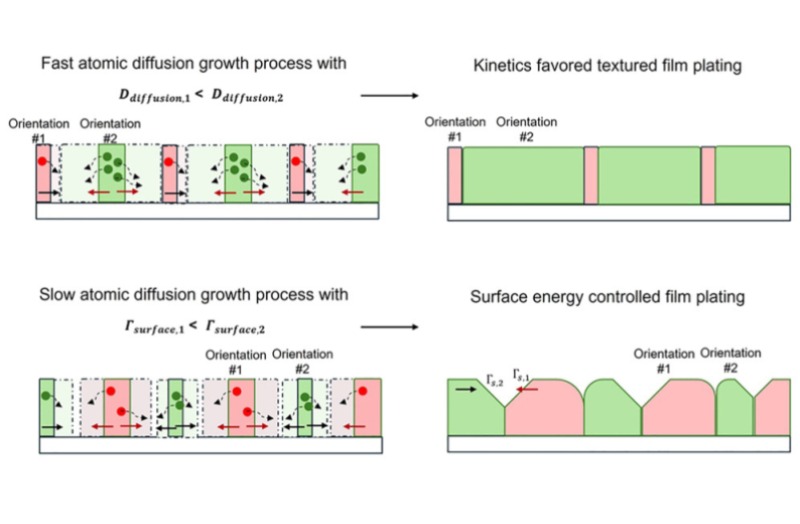
“But there is a gap in understanding the grain orientation, also known as the texture,” observes Liew Family Professor in Molecular Engineering, Shirley Meng. “In particular how this factor impacts the rechargeable metal battery performance.’
Meng and Associates published a paper in Joule on February 10, 2025, that we link to below. In it, they explain how they broke through that barrier, and showed that improving the metal’s texture greatly improved performance.
“In our work,’ she explains, “we discovered that adding a thin layer of silicon between lithium metal and the current collector, helps create the desired texture.
“This change improved the battery’s rate capability by nearly ten times, in all-solid-state batteries using lithium metal.” But how did they go about tweaking textures on negative anodes? Let’s find out.
Tweaking Anode Surfaces to Improve Power Density
An ideal anode texture should allow atoms to move rapidly along the surface plane. This fast movement would then allow the battery to charge and discharge faster. The researchers realized that differences in a soft metal’s surface energy, could actually change the surface texture too.”
By now, the team also knew that anode texture corresponded with lithium and sodium capabilities. This introduced an intriguing question. Could tweaking textures on negative anodes improve their density further?
You’ll have to follow our links below, if you would like to know more about the procedures the researchers developed and followed. Suffice to say that their theory proved true. Could this open the door to replacing lithium-ion with cheaper, safer sodium batteries?
More Information
Anodes and Cathodes and Their Roles
Organic Lithium-ion Anodes? Cheers!
Preview Image: Tweaking Textures on Negative Anodes