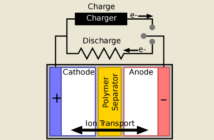
There are no rare earth metals in lithium-ion batteries. However, demand for those batteries would be far lower, were it not for the magnets in electric vehicle motors. Certain other battery chemistries, notably nickel-metal hydride, do contain some rare earth metals. We are deeply concerned when we hear of huge machines mining rare earth metals in remote, previously unspoiled places.
Surface Mining Rare Metals at Bayan Obo
Baiyun’ebo, aka Bayan Obo, is a mining district in Inner Mongolia, China. The mines near the town by that name, extract the largest deposits of rare earth metals on record.
Mining rare earth metals from the vast, arid, Bayan Obo landscape, is irretrievably leaving a trail of devastation there. A field visit by scientists from Sarah Lawrence College in New York in 2015, identified the following concerns:
“For every ton of high-quality rare earth metal being produced, the facility creates many more tons of radioactive wastewater, acid waste, carbon dioxide, and other toxic emissions.”
This trail of environmental pollution is far from the minds of consumers though. They are blissfully unaware of what is happening, as they enjoy their smartphones, computers, blue tooth speakers, television screens, LED lights, camera lenses, superconductors in devices, and yes, electric vehicle motors too.
However, the Sarah Lawrence College researchers uncovered a different picture on the ground among local inhabitants. Few of them benefited from the magnetic and conductive properties of the rare earth metals.
Instead, the traditional nomads downstream from the airborne pollution were more likely to have skin lesions, thinner hair, brown teeth, and bone deformities. But that was back in 2015. Has the situation improved since then?
More Awareness, But Rare Earth Stripping Continues
A BBC News team recently visited Bayan Obo for an update. They, too, found what they called “poisoned water and scarred hills”, as dust clouds rose from deep craters. They also reported lakes full of radioactive sludge.
The reporters heard claims of polluted water and contaminated soil too. These have been linked to clusters of cancer and birth defects in the past, they say. Chinese authorities are trying to clean up the mining sites. However, at least one mining manager did not welcome BBC News particularly warmly.
More Information
From Imported Rare Earth to Recovered Asset
Plastic Batteries From Conductive Polymers
Preview Image: Bayo Obo Mining District (Google Earth)