

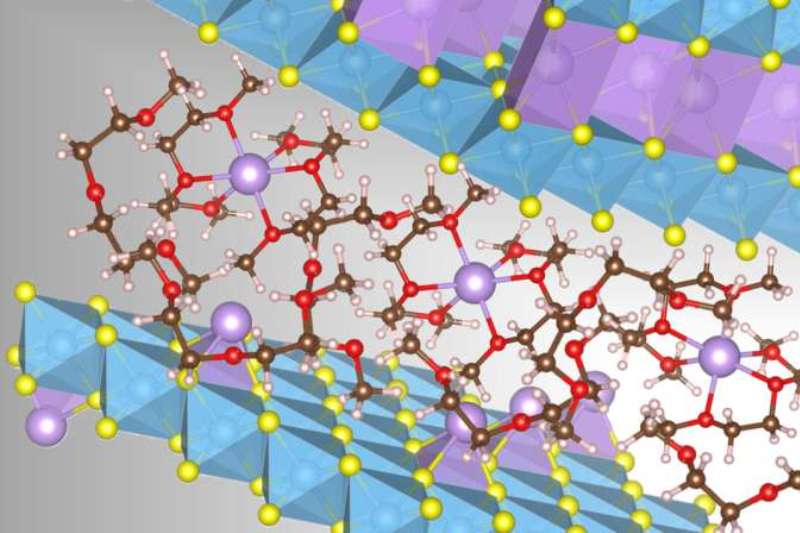
The Helmholtz Association of German Research Centers, published a thought piece on Tech Explore that we found well-worth exploring. Their topic is co-intercalation, which we had previously considered something to avoid. But Helmholtz Association found benefits forthcoming from co-intercalation for faster sodium charging, that we had not imagined before.
Solvent Co-Intercalation in Sodium-Ion Layered Cathodes
We begin our journey into this new topic in a report on Nature Materials on July 18, 2025, which we link to below. There, researchers from several German institutions share their opinions regarding co-intercalation for faster sodium charging.
They explain how co-intercalation is the simultaneous intercalation of ions and solvent molecules in electrode materials. Although most of the information the researchers could lay their hands on, centered around graphite anodes.
The Helmholtz Association picked up the threads in an article they wrote on Tech Explore, which we also link to below. The Association begins by recalling how sodium-ion and lithium-ion batteries store and exchange their ions, between two different electrodes.
However, this new research, Helmholtz continues, has demonstrated that simultaneous co-intercalation of these ions and solvents, can be a reversible and fast process in sodium-ion cathodes. This is the reason behind their fresh interest in this often-overlooked topic.
Towards Faster Charging Sodium-Ion Batteries
The Helmholtz Association applied their minds to the possibility that simultaneous co-intercalation resulted in faster charging, and discharging of sodium-ion batteries.
They were particularly interested in how this affected the battery electrodes. While the research confirmed the negative effect on the anodes, the impact on the cathode materials was ‘very low’, they noted with anticipation.
“Above all, certain cathode materials offer a huge advantage. The kinetics are super-fast, almost like a supercapacitor. Exploring the concept of co-intercalation was extremely risky for us, because it was against classical battery knowledge.”
More Information
Understanding Intercalation In Batteries 101
Facts of Intercalation You May Not Know
Preview Image: Co-Intercalation Between Layered Materials


