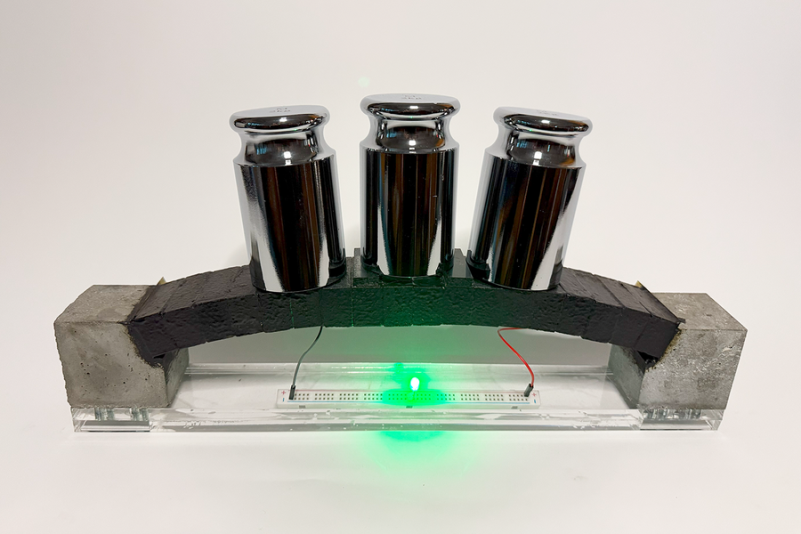
Concrete is a major greenhouse gas emitter, due the amount of energy required to manufacture and recycle it. Someday we will find a practical alternative for concrete. Until then, we should use it as productively as possible, including storing more energy in concrete than we currently do.
Storing Energy in Concrete Currently
Concrete, and bricks and stones for that matter, have a high thermal mass. They can absorb solar energy passively, and use it to keep buildings warmer at night. They can also cool naturally after dark, and help keep our buildings more comfortable during daytime.
We described work by Massachusetts Institute of Technology (MIT) researchers back in July 1, 2023. They had just succeeded in creating concrete containing carbon black networks, to store energy and allow electrons to flow.
“The material is fascinating,” a Massachusetts Institute of Technology scientist remarked at the time. “You have these at least two-millennia-old materials. But when you combine them in a specific manner you come up with a conductive nanocomposite, and that’s when things get really interesting.”
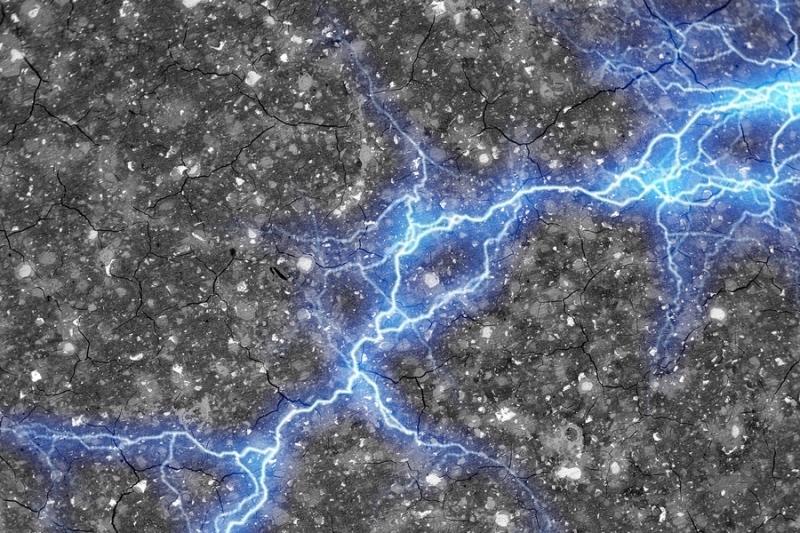
However there was a catch, as often happens when ideas leave the laboratory and enter the real world. MIT needed 45 cubic meters / 1,500 cubic feet of carbon-embedded concrete to power the average house. Clearly, they had to find an efficient way of storing more energy in concrete.
10-Times More Energy in Embedded Concrete
Meanwhile, the researchers at Massachusetts Institute of Technology have been improving their design. They are now storing ten-times more energy in concrete than before. They envisage creating carbon networks inside concrete walls, sidewalks, and bridges eventually, that “double as batteries” storing renewable energy.
They have now increased the efficiency of their product to the point where 5 cubic meters / 175 cubic feet of carbon-embedded concrete could power the average house. Their success is down to a more conductive network, that “surrounds the concrete pores like a spider web”.
More Information
Concrete and Carbon Black Supercapacitors
Concrete is a Major Greenhouse Gas Emitter
Preview Image: Electron-Conducting Arch Structure