Scientists at University of Osaka in Japan, and Daikin Industries based nearby, have formulated a new measure of lithium-ion battery potential. This takes us a step away from experimenting with different materials, to a broader approach focusing on a common factor. This in turn could make it easier to compare alternatives before delving deeper.
Measure at The Heart of Lithium-Ion Battery Potential
The Osaka team have identified a ‘crucial new factor for designing advanced lithium-ion batteries,’ according to a Eureka report we link to below. This novel ‘ruler’ measures a factor that they call ‘electrolyte lithium-ion chemical potential’.
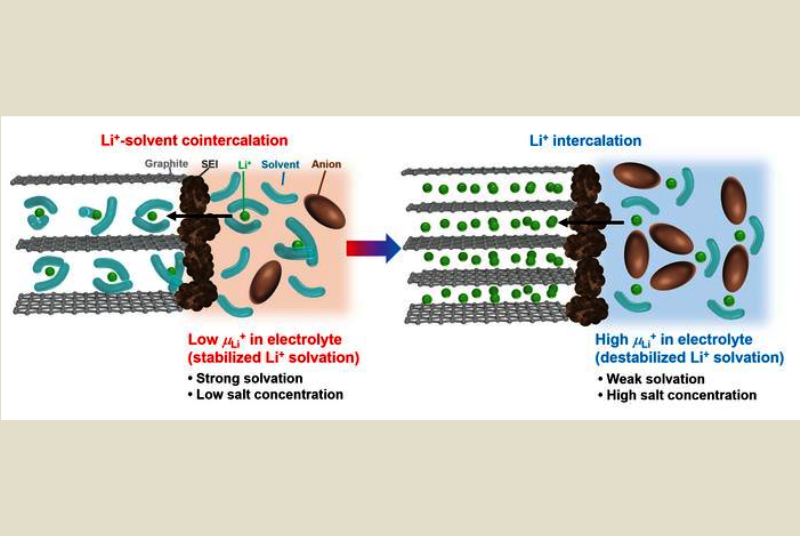
This criteria assesses how ‘uncomfortable a lithium ion is within a battery’s electrolyte’. This measure of lithium-ion battery potential in turn, rates whether a battery can be reversibly charged, and discharged.
The scientists who prepared the report reason that their formula creates a path away from hit-end-miss development. Instead, they say, battery researchers now have a ‘rational, data-driven design process for safer and higher-performance batteries’.
We can see merit in having a generic indicator of success. The battle to take lithium-ion chemistry to a more powerful, safer level is ongoing. Researchers have continued experimenting with different electrolytes, but without a clear guideline that could predict success.
The Exciting Potential the Researchers Found
The team from University of Osaka and Daikin Industries, discovered a key factor in the lithium-ion chemical potential in an electrolyte. They found that lithium ions only moved from the electrolyte to the graphite anode, when they were sufficiently unstable, in other words when their chemical potential was high.
Using their new measure of lithium-ion battery potential, the team were able to derive a new standard for acceptable lithium-ion electrolytes. Their discovery of what enables excellent battery performance, hence promotes a new path to designing highly efficient electrolytes.
“In this study, we did more than discover a new material,” says Dr. Yasuyuki Kondo, lead author of the study. “We identified the factor that actually governs charge-discharge reactions in lithium-ion batteries.“
More Information
Secrets Inside Lithium-Ion Batteries
Electrolytes in Electro-Chemistry Moving Ions