The first smartphone battery ever to reach consumers, used nickel-cadmium chemistry. It powered the IBM Simon cellular phone and personal digital assistant, available from August 1994 to February 1995. IBM Simon may have blazed a trail, but it was more of an experiment than a solution.
The 50,000-odd customers discovered their phone only worked on Bell Labs proprietary advanced mobile phone system network. And so you had to purchase two, if you wanted to stay in touch with your partner!
More About The First Smartphone Battery
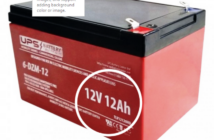
The first smartphone battery ever to reach market, used rechargeable nickel-cadmium chemistry. This means it used nickel oxide hydroxide, and metallic cadmium for its electrodes. In those days you see, lithium batteries were still in the formative stage.
IBM Simon was by no means small. It measured 8 inches (200 mm) by 2.5 inches (64 mm) by 1.5 inches (38 mm) thick, and weighed in at 18 ounces / 510 grams. So we could say it was the original ‘brick’, so to speak.
The World Economic Forum confirms that IBM Simon’s battery life was as short as one hour continuous use. No wonder this ‘wonderful invention’ was only available for six months! It soon fell victim to Nokia’s relentless march, Windows software, and the arrival of Internet-connected phones.
So What Did The IBM Simon Smartphone Do?
The brave experiment was actually quite revolutionary for its day, compared to plug-in-the-wall analog telephones. It ran on IBM’s proprietary Navigator software, and boasted a whole one megabyte memory.
The bulky but brave pioneer had a battery charger, a touchscreen, and email capability too. It even had a couple of apps, including a calculator, and a sketch pad of all things!
None of This Would Have Been Possible Without Batteries
None of this would have been possible, without compact nickel-cadmium batteries, and smaller integrated circuit chips. Perhaps another reason why the IBM Simon flopped, was its price. This opened at $899 per phone, although IBM dropped it to $599 with a two-year contract.
IBM Simon was a brave step down an unknown road. It earned its place in history, not for what it is was, or for what it did, but for providing an inspiration that lives on in our smartphones today.
More Information
Silicon Carbon Batteries In Smartphones
Recycling Smartphone Batteries in Situ