The birth of the modern battery was a private affair, with only two amateur scientists attending. Prior to that, our ancestors stored energy in glowing coals, and in ponds they used to turn water wheels.
But from the mid-eighteenth century onward, amateur scientists used Leyden Jars to store electrical energy instead, although these released all their energy at once. You see, there were no generators back then. This was the only way to ‘make electricity’.
Two Stages in Modern Battery Evolution
Benjamin Franklin was an American inventor who liked playing around with Leyden Jars. He followed the then revolutionary practice of connecting several jars together to create a stronger charge.

When Franklin looked down on his multiple Leyden Jars in an open box, they reminded him of the artillery batteries grouped together in the American Revolutionary War. So much for the name, but somebody still had to invent a practical battery.
Luigi Galvani and Alessandro Volta were two Italian amateur scientists, who were also good friends who shared ideas. They noticed that electrical events occurred, when they separated different metals with moist separators.
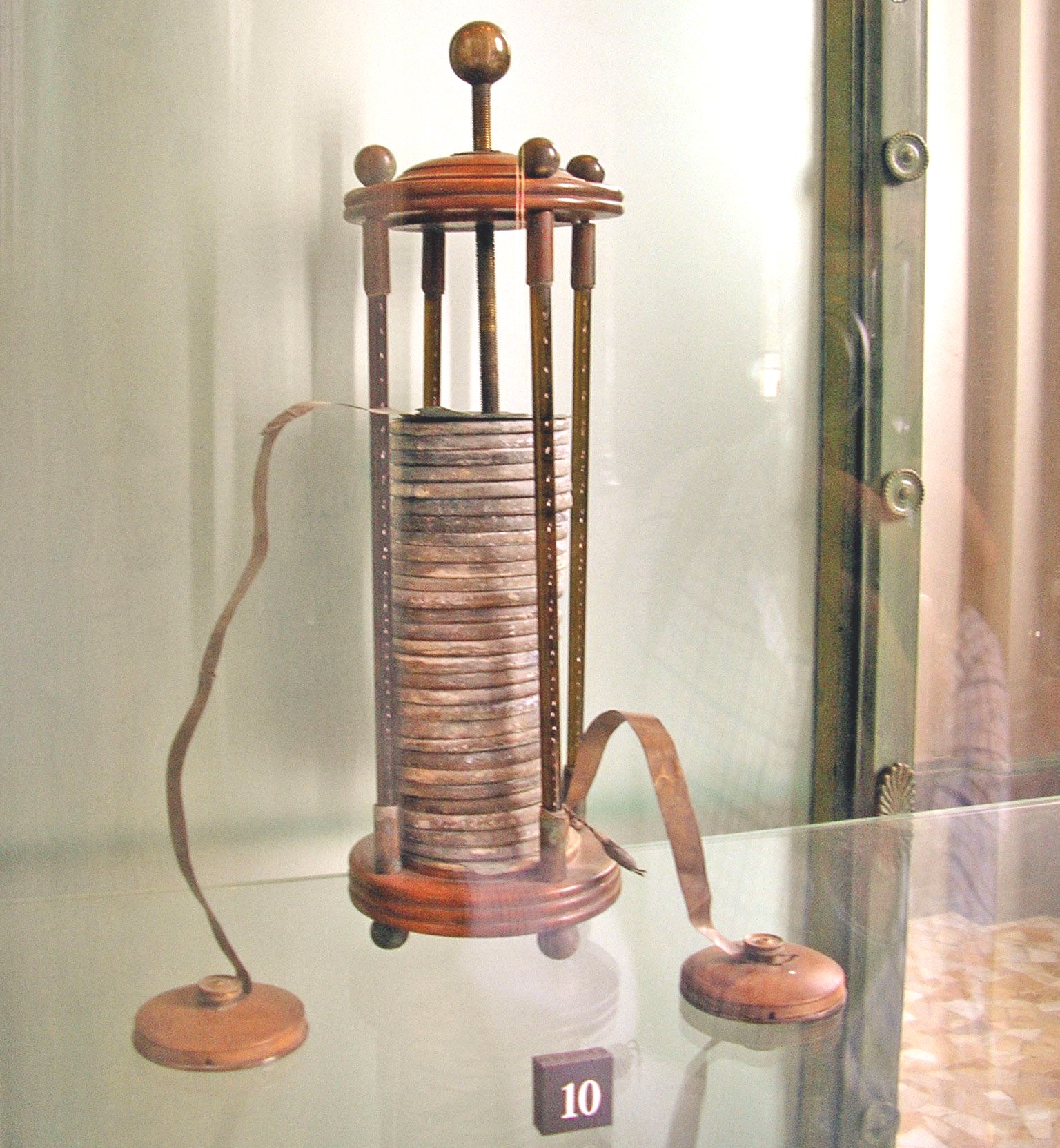
But it was Volta who was actually responsible for the birth of the modern battery. He stacked a pile of copper and zinc discs with moist material between each pair. The result was amazing. Volta had stored electricity on tap, whenever he needed it for an experiment!
The World’s First Practical Batteries Appear
Volta’s pile was not quite practical, though. It tipped over quite easily, and you had to bring your application to the battery. A whole host of portable applications followed, but none of these satisfied the need for a battery that you could use again and again.
The real birth of the modern rechargeable battery occurred in 1859. This was when Gaston Planté invented the first commercial lead-acid battery. This looked like a large cylindrical cell with rolled lead sheets, and it worked well enough to sell.
Then Camille Faure completed the puzzle with stacked lead plates in 1881. This established an overall design which still remains popular today. There is good reason for this. Lead-acid gel batteries are affordable, stable, predictable, and their electrolyte cannot catch fire.
More Information
Did Volta Make The First Battery?