Researchers at Penn State University appreciated that biological-implant power supplies should be flexible, and non-toxic. Yet, at the same time, they need to be sufficiently powerful to do their job. Just like electric eels, we can imagine them thinking. And that’s how eels inspired gel electrolytes at Penn State University to a remarkable extent.
Multiple Layers of Hydrogel Electrolytes
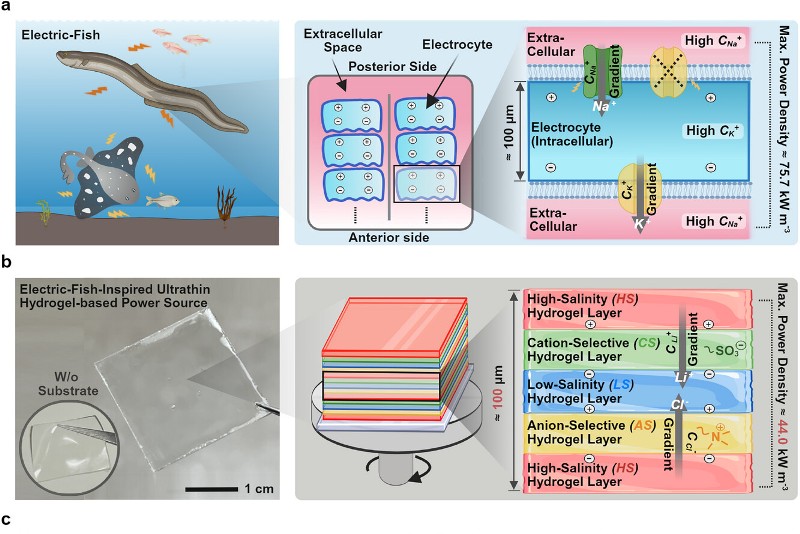
The word ‘hydro’ means water. The flesh of electric eels is moist and can conduct electricity. The Penn State team put two-and-two together, and used multiple layers of hydrogels to achieve the same thing.
However, their chosen material needed one more tweak. They selected a number of different water-rich hydrogel type, which they arranged in a particular pattern. This pattern recalled the ionic processes that electric eels use to generate bursts of electricity.
And that, in a nutshell, is how eels inspired gel electrolytes in a Penn State University laboratory. But how did they achieve this in practice? Read on and discover how they made their idea practical …
Very Thin Hydrogels Add Mechanical Strength
The scientists knew that previous attempts to make eel-like energy sources, only produced limited power output. These also required mechanical support to work properly. Once again, an electric eel-inspired idea carried them forward.
Electric eel electrolytes are very thin biological cells that generate over 600 volts in brief bursts. The Penn State team produced ultra-thin hydrogels, that did not require mechanical support and produced more power.
There’s more to this story, as you will discover if you follow the links below. Suffice it to say that electric eels inspired the gel electrolytes, but it took human imagination to turn the idea into something useful for the medical profession.
More Information
Soft Stretchy Jelly Batteries Like Eels
Bio-Integrated Batteries for Medical Devices
Preview Image: Electric Eel-Inspired Electrolytes