Achilles was a Greek god whose mother dipped him in sacred water to ensure his mortality. According to legend she hung onto his foot, and so this did not receive protection. When an arrow struck Achilles’ heel that was the end of him. So what do you think is the achilles heel of solid batteries?
The Weak Spot in Solid-State Batteries
Solid batteries, or solid-state to be more precise, have a habit of failing early, and this is holding the technology back. Researchers at Massachusetts Institute of Technology (MIT) have been investigating, and advise that they have found the reason why these batteries fail early.
The achilles heel of solid batteries is early failure due to dendrite formation. Metallic cracks appear in solid battery electrolyte, such as we might notice when a tree root is growing beneath a concrete sidewalk. However, when the MIT team investigated further, they found the cause of the cracks was not pressure.
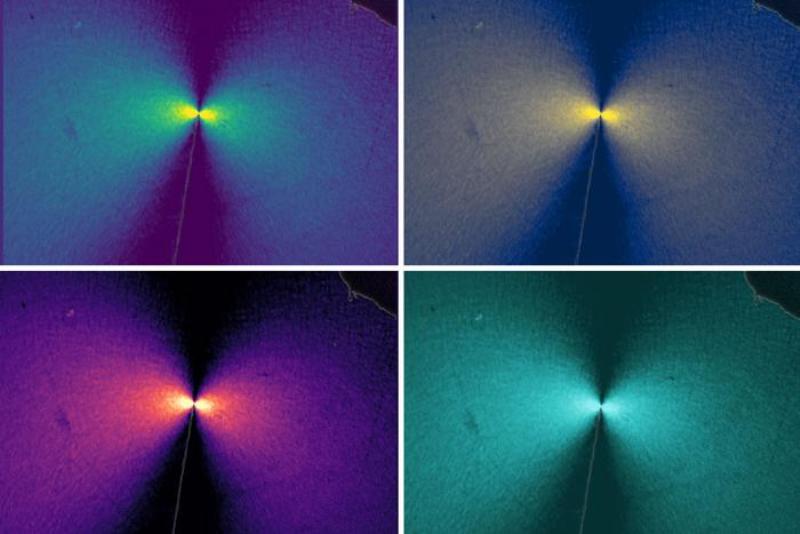
The dendrites were not forming because of pressure and stress. In fact, the stress levels were a quarter of what they expected in a solid electrolyte. But first they had to invent a new technique, that allowed them to directly measure the stress around growing dendrites:
High Electrical Currents The Achilles Heel
The researchers at MIT discovered a more likely cause of the achilles heel of solid batteries, in the form of high electrical currents. These surges of energy spawned chemical reactions that weakened the solid electrolyte, and facilitated dendrite formation.
This was a particularly interesting conclusion, given that previous research suggested these reactions directly cause dendrite growth. So your take-away from this article could be the interplay between chemical and mechanical stress.
“Direct measurement techniques allowed us to see how tough the material is as we cycle the cell,” according to the paper’s first author. “But during charging, the electrolyte gets a lot weaker – closer to the brittleness of a lollipop.”
More Information
The Origin of Dendrites Revealed By NMR
Watching Dendrites Grow in Real Time