The Royal Society of Chemistry reminded us of the war of the battery cathodes, in an intriguing article we link to below. The two contenders are lithium nickel manganese cobalt (NMC) and lithium iron phosphate (LFP) cathodes. These chemistries are shaping the battery industry in a struggle that neither of them can win.
Are NMC or LFP Battery Cathodes Better?
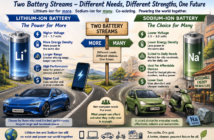
The answer very much depends on what you want out of your electric car. NMC stores more electricity, and that means you would have a longer driving range.
While LFP delivers a longer battery life and is cheaper and safer. Although this comes at the cost of a shorter driving range. And so both cathode types have their advantages.
The practical, pragmatic Chinese took sides early in the war of the battery cathodes. Their government backed, and continues to promote lithium iron phosphate (LFP) cathodes.
Meanwhile, lithium nickel manganese cobalt (NMC) continues to evolve in western societies favoring longer driving ranges. Companies there are busy improving their safety and stability.
Future Role of Cathodes in Lithium Batteries
Battery cathodes receive and deliver electrical energy to the user. Their materials and design dictate storage capacity, voltage, and charging speed of electric vehicles. Different user requirements suggest there will be no outright winner.
This is why the Royal Society of Chemistry suggests the war of the battery cathodes will continue. Lithium iron phosphate (LFP) cathodes will continue to appeal to nations desiring mass affordable electrification.
While competitive individuals after high performance will continue to favor lithium nickel manganese cobalt (NMC). Which type of electric car battery do you prefer for your own personal needs, and why do you feel that way?
More Information
Cathode Redesign For Lithium-Ion
NMC Versus LFP EV Fire Risk Compared