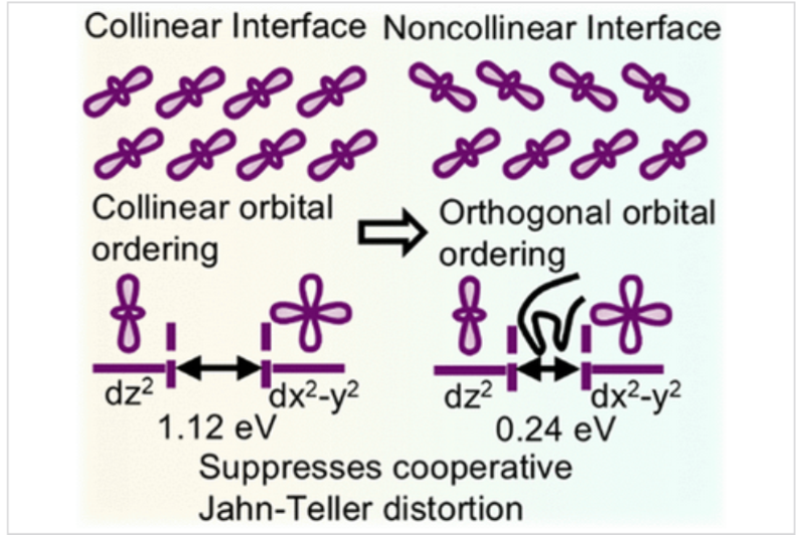
Lithium manganese-rich oxides are an exciting alternative to using cobalt in cathodes, but for one problem. Distortions occur in their molecules and ions in what’s knows as the Jahn–Teller effect. Scientists at Nanjing University of Science and Technology in China, report their cathode redesign for lithium-ion batteries drastically reduces the problem.
How Cathode Redesign Limited Distortions
Cathode and anode electrodes in batteries make critical contributions to overall performance. The Nanjing scientists uncovered the root cause of Jahn-Teller distortions in lithium manganese-rich oxide cathodes.
The lithium-ion battery performance improved quite radically, thanks to their cathode redesign for lithium-ion batteries that followed. The cathode electrode had a longer operating life, and near ideal stability during charge /discharge cycling.
This success was largely due to the scientists applying interfacial orbital engineering, in order to resolve electron orbital overlap. Here’s a quick summary of this phenomenon:
- Electrons follow orbital patterns around atoms. Orbital overlap occurs when other atoms come too close.
- Interfacial orbital engineering fine-tunes this orbital overlap at material interfaces, to improve energy transfer.
Managing orbital overlap this way, promoted a wider, smoother route for electrons to travel between materials. This in turn improved overall battery efficiency.
Is This a Break Through for Lithium-Ion?
Tech Explore rates this work at Nanjing University of Science and Technology as a technical break through. They reason this way, because the scientists did not fall back on doping or macroscopic coatings.
Instead, the team tackled the root cause at the atomic and electron level. This approach ‘heralds the arrival of cheaper, more durable, and eco-friendly battery technology in everyday life,’ Tech Explore continues.
Being able to use cheaper, abundant, and greener manganese instead of controversial cobalt, hints at fresh opportunities for electrical storage and e-vehicles. This makes this cathode redesign for lithium-ion batteries a step forward in the right direction.
More Information
Electrons Versus Ions in Batteries
How Ions And Electrons Work Together
Preview Image: Suppressed Jahn-Teller Distortion