Hey kids, welcome back and great to see you again. Today, we are going to perform a school experiment to demonstrate the world’s first battery. But first, we need a few moments to explain why this is so important.
Why Demonstrate the World’s First Battery?
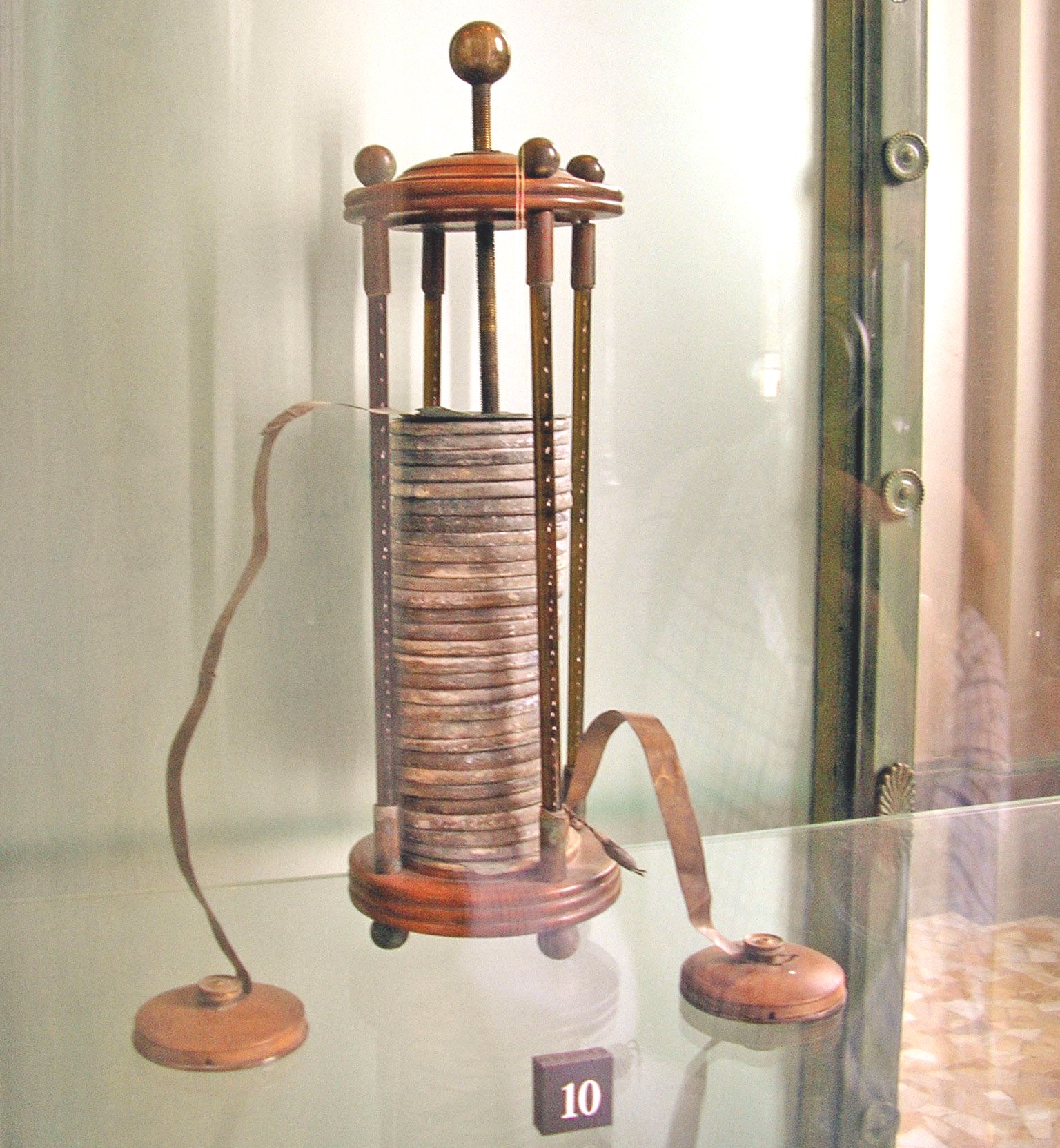
In 1800, Italian scientist Alessandro Volta created the world’s first true battery, which we call the Voltaic Pile in his honor. Alessandro built it by stacking alternate discs of zinc and copper, with cardboard pieces soaked in salty water between them.
The different metals and the salty liquid electrolyte created a flow of electricity. This was not possible previously before this breakthrough. Because, until then, scientists could only make sparks from static electricity.
But Alessandro’s battery produced a steady electric current for the first time instead. Sure, it was simple and weak compared with modern batteries. But it proved that chemical reactions between different metals could create electricity.
This experiment will help you demonstrate the world’s first battery to your school pals and friends. Remember to explain that this same technology enabled electrical devices for the first time.
Let’s Demonstrate the World’s First Battery!
Set aside one small bowl of vinegar, 19 small squares of paper, 10 copper-coated coins, and ten zinc-coated ones. Add an LED light, with wires attached, to your collection. Now do the following:
- Quickly dip the paper squares in the vinegar to moisten them. This creates the electrolyte for the battery.
- Assemble a column of alternating copper and zinc coins, with the moist paper squares between them.
- You now have the complete battery, comprising 10 cells arranged in series. But where’s the electricity?
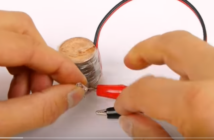
A battery can only release electricity when its electrons flow through a circuit. Touch the LED wires to the top and bottom coins. Watch those electrons flow, as you demonstrate the world’s first battery!
More Information
Alessandro Volta: Father of Modern Battery