Many visitors to our blog, suspect that a battery somehow creates its own ions while it is working. In reality, the ions were already there before the battery powered its first device. So where did the ions originally come from then?
The Ions Originated In The Active Battery Materials
Manufacturers carefully assemble a battery from materials they select for their chemical properties. The electrodes and the electrolyte contain compounds that naturally include the atoms able to become ions.
The battery does not manufacture these particles though. Instead, it provides the right conditions for them to materialize.
Original Battery Formation So the Battery Is Ready For Use
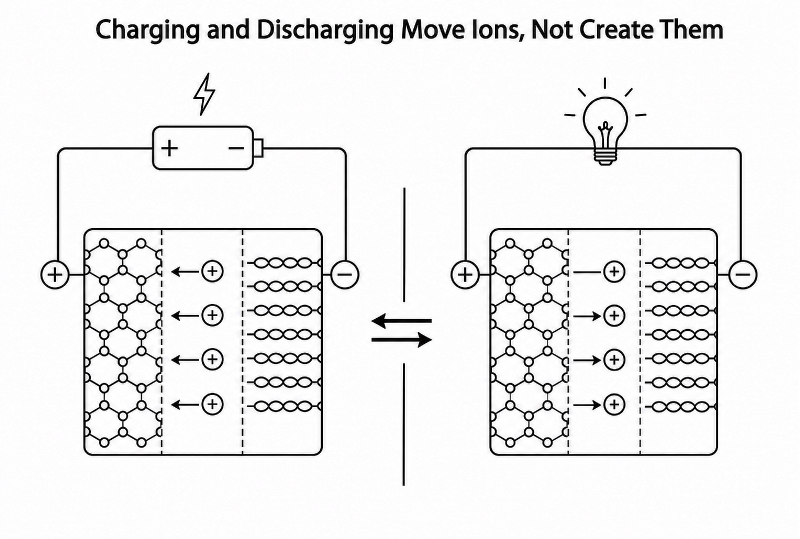
The next stage is where the ions originally almost magically appear. Scientists call this process ‘formation’. This is the moment where manufacturers charge and discharge the battery for the first time.
During this stage they prepare the battery’s internal chemistry for normal operation. After formation, the ions are ready to move back and forth between the electrodes, every time the battery is charged and discharged.
Does This Method Work On All Battery Types With Ions?
The type of ion depends on the battery chemistry. A lithium-ion battery uses lithium ions, because its active materials contain lithium compounds. A sodium-ion battery uses sodium compounds. A lead-acid battery relies mainly on hydrogen and sulfate ions in its sulfuric acid electrolyte.
The Special Role Of The Electrolyte In This Process
The electrolyte deserves special mention. It does not create ions, but it provides the pathway that allows them to travel safely between the battery’s positive and negative electrodes. Without this pathway, the chemical reactions that produce electrical energy could not continue.
So The Ions Were Present From The Beginning?
So now we know where the ions originally came from. They were always there. Charging the battery did not create them. It simply released them to move in one direction or the other as the battery stored or released energy.
More Information From Our Battery Blog