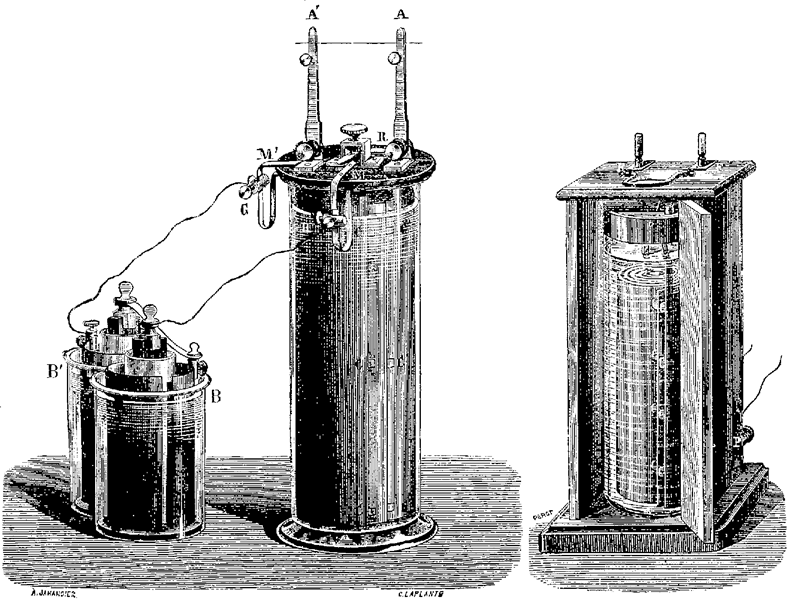
Scientists had developed several useful primary cells by the middle of the nineteenth century. The first lead-acid battery added a new dimension because it was the first one that could recharge.
Prior To This They Could Not Restore The Power
Earlier batteries produced electricity through chemical reactions, but users could not recharge them. There was a growing need for a device capable of storing electricity and delivering it repeatedly.
The Answer Came From French Physicist Gaston Planté
The solution came from the French physicist and inventor Gaston Planté. Planté created the first lead-acid battery in 1859, and this introduced the world’s first practical rechargeable battery.
Planté’s First Lead-Acid Battery Was Simply Ingenious
Planté’s original design was simple but ingenious. He used two sheets of lead, separated by strips of insulating material, and rolled them into a spiral. Then he placed this in dilute sulfuric acid.
When he applied an external electrical current, chemical changes occurred on the surfaces of the lead plates. This charged the early Planté cell after he ‘ran it in’.
This process, later called formation, gradually increased the active material available on the plates. Although the battery was relatively heavy and produced only limited capacity compared with later designs, its ability to recharge made it revolutionary.
Planté’s Invention Arrived At An Opportune Moment In Time
Planté’s invention arrived before widespread electrical generating systems . As electricity became increasingly important, the lead-acid battery found valuable roles in laboratories, telegraph installations and early electrical experiments.
The Importance Of Planté’s Work Extended Far Beyond
The importance of Planté’s work extended far beyond his original construction. He demonstrated that electrical energy could be stored chemically, and recovered when needed.
His lead-acid cell became the starting point for an industry that would later support transport, communications, emergency systems and standby power.
More Information From Our Battery Blog