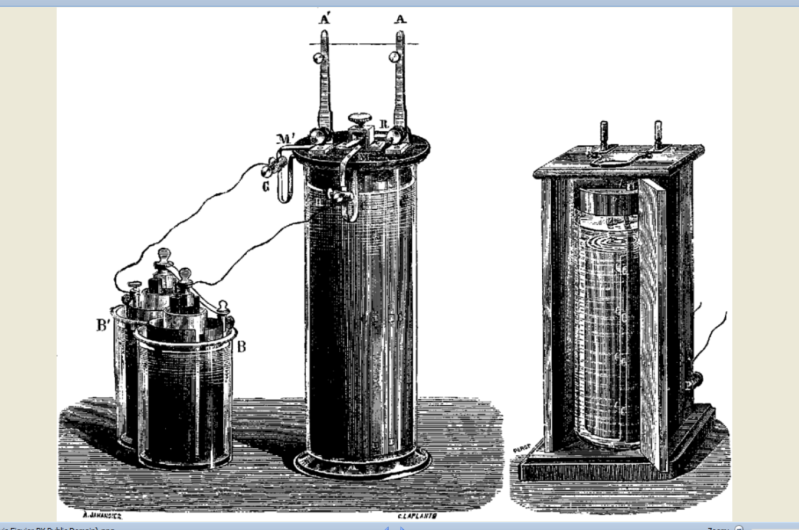
We will probably never know what inspired Gaston Plante to create a spiral roll of two lead sheets. And immerse them in a sulfuric acid solution to create the world’s first lead acid battery in 1859. After all, his earlier work involved researching fossil remains of a prehistoric flightless bird. Nonetheless, it is a fact that Gaston Plante’s lead acid battery cell transformed the energy world.
Gaston Plante’s Lead Acid Battery Gets Legs
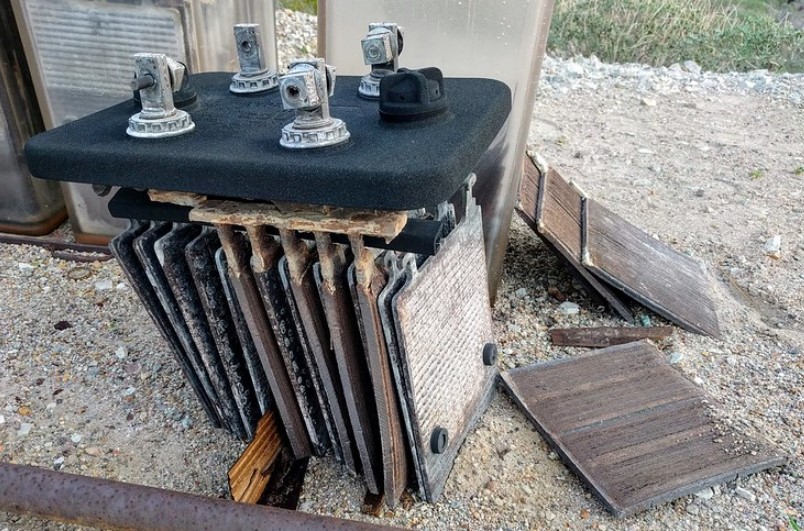
By 1860 Gaston Plante had refined his battery to the familiar stacked cell format we know well today. His first takers included pioneering electric cars. But that was only after he came up with an improved version in 1881.
Modern lead acid batteries continue to follow Plante’s original inspiration, although its successors have made a number of modifications. UPS Battery Center supplies the latest lead acid technology for UPS, alarm, and home, garden and sports applications. Elsewhere other suppliers provide starter, forklift, and marine batteries.
Tweaking Gaston Plante’s Original Design
Pure, soft lead sheets were ideal for Plante’s original spiral roll. However, they are too feeble for prolonged use in stacked cell versions, because they cannot support themselves adequately.
Therefore to counter this, battery manufacturers add additives to make them technically better, and mechanically stronger too. The commonest materials are antimony, calcium, tin and selenium, however lead acid batteries are by no means perfect.
The Pros and Cons of Lead Acid Batteries
The underlying drawback of Gaston Plante’s lead acid battery cell continues to be the weight, and bulk of the base material. Moreover, lead acid batteries do not like deep discharges to the point they are effectively ‘flat’.
However, that said lead acid batteries are popular because of their relatively low price, and high operating safety. And moreover, their simple design also makes them easy to dismantle and recycle their components. There’s ample evidence they will be serving us faithfully in the future, on the back of ongoing, exciting research.
Breaking News
Solar Lighthouse in the Sky at Ashalim