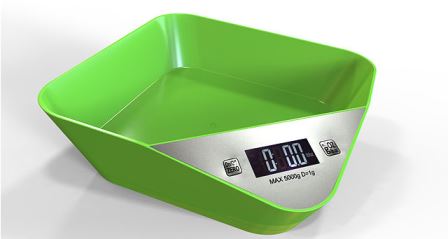
A cook’s life would be incomplete without a kitchen scale. This is especially true in the hectic days leading up to Christmas. In olden days, we spoke of a pair of scales where one was a reference point for the other. Thanks to lithium batteries and electronics we nowadays have a single weighing platform. However, the device still computes by the process of comparison, using a Wheatstone Bridge.
The Wheatstone Bridge Inside Your Kitchen Scale
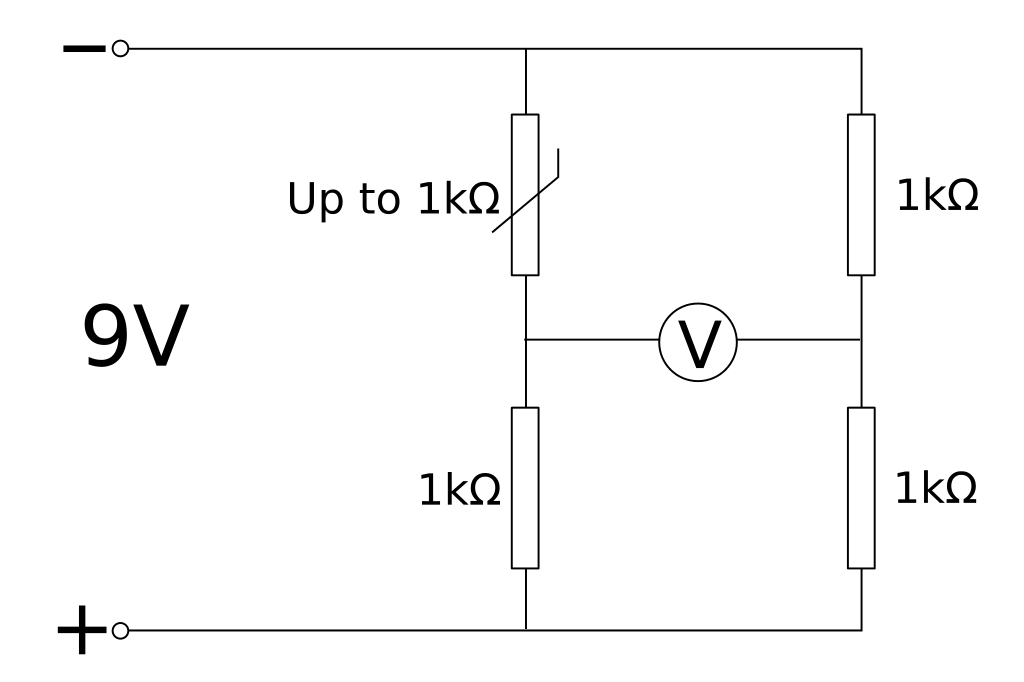
A Wheatstone Bridge measures the resistance inside a resistor by adjusting a second one until the difference cancels out. Therefore if you have a multi-meter, you already own one.
It takes its name from the 19th Century scientist Charles Wheatstone who also invented the concertina. However in the case of the bridge he built it on Samuel Christie’s ideas.
How a Kitchen Scale Weighing Platform Works
Scales calculate weight in a variety of different ways depending on the accuracy required and weighing range. Thus we have scales using counterweights, springs, hydraulics, air pressure, and mechanical resistance.

A kitchen scale supports its platform on hard material that compresses fractionally under pressure. This greater density increases its electrical resistance.
The Wheatstone Bridge runs the numbers and sends the results to the CPU. This reports the result in a digital readout.
Kitchen scales generally have ‘pressure points’ on each corner for the Wheatstone Bridge to resolve. These also ensure platform stability while countering the effect of the temperature of the product.
Factors to Consider When Choosing a Kitchen Scale
The main question to consider is the degree of accuracy you require. The more precise the scale, the more delicate, and expensive the resistors. Kitchen scales are hence a compromise between cost, and their ability to provide the same reading every time. Beyond that, the quality of a kitchen scale is a function of how much we wish to pay.
Related