While watts measure the flow of electricity, volts are the potential in networks and batteries that supply it. Try thinking of voltage as pressure we can release by establishing a current flow. If we open the ‘tap’ too much, or use the wrong conductor, the device can overheat and cause an electrical fire. Hence, we need to understand the volt standards in use today to protect our safety.
Why Different Countries Use Different Voltages
Russia uses 220 volts, and so does China. Why is North America different at 120 volts, when Europe, Asia and Africa are on 230 volts? And Australia is on 240 ‘down under’. Like so many other things, we have Thomas Edison to thank for this difference in volt standards. You see, he found his light bulbs lasted longer on the lower voltage, so that is what we ended up with. But we are not really all that different.

If you look inside your breaker panel, you will notice not one but two 120-volt conductors. Most times, we use one of these plus the neutral conductor to create a 110 / 120 supply.
If we need more power for say an electric furnace then we connect the two 120-volt conductors together. That provides the full 240 volts we need in that instance. Our generally lower voltage standard also tends to be safer. So it makes sense to use the lower voltage when we can.
Some Common International Volt Standards Applying

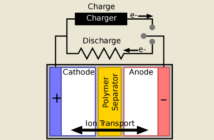
However, worldwide standards are possible for standalone devices. For example, single-cell, rechargeable nickel metal and nickel cadmium batteries are all 1.2 volts.
And lithium-polymer ones are 3.75. Internal combustion autos run on a nominal 12 volts, while electric car batteries are 400 volts fully charged.
We have to maintain these international volt standards for our own convenience. Imagine having to purchase new laptop and smartphone batteries each time we traveled from country to country on a business trip or tour!
Related
Voltage In A Battery : We Need It To Be Constant
Image Preview: Edison Carbon Filament Light Bulbs