A machine is a physical device that uses energy to do work, or to make tasks easier. Batteries may look simple from the outside, but inside, batteries are more like chemical machines doing repetitive tasks.
The Major Parts Inside The Batteries We All Use Daily
Every battery contains three essential working parts. These include two different electrodes. and a chemical solution or material we call the electrolyte.
- The electrolyte allows tiny charged sub-atomic particles to move between the electrodes
- Electrons flow through the outside circuit simultaneously, providing useful electrical energy
If any one of these three parts is missing or malfunctioning, then the battery cannot do its work.
Galvani’s Frog Legs Used Moisture As Battery Electrolyte
All batteries are chemical machines. Galvani’s frog legs contained moisture that acted as the electrolyte. The two different metals in Galvani’s laboratory acted as electrodes. Volta replaced the frog legs with salty cloth and metal discs to build the first practical battery.
All Batteries Are Chemically Similar Regardless of Type
Modern batteries still follow exactly the same principles as the first ones. Their materials may change and vary, but the basic design remains the same.
A battery may light up a torch, start a car, power a UPS, or store energy for a solar system. Notwithstanding this, it always depends on the chemical reactions that move electrical charges from one place to another, inside the case.
Why All Chemical Batteries Gradually Lose Their Charges
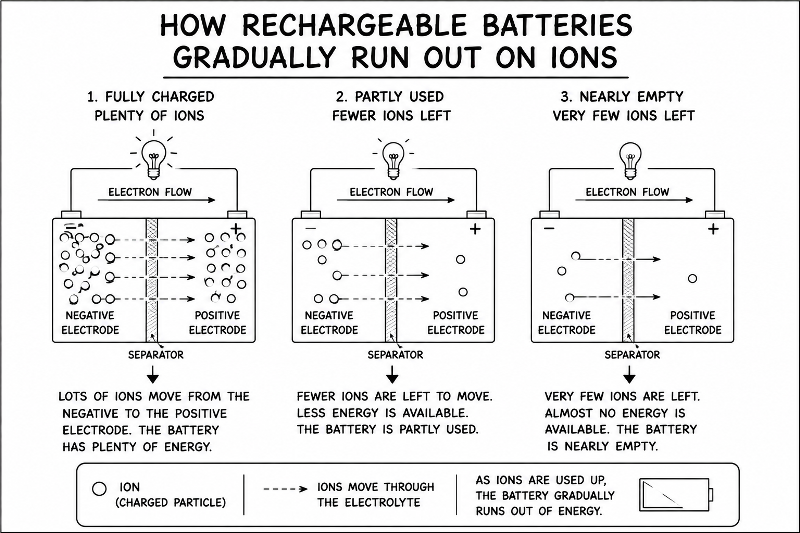
All electrochemical batteries slowly become flat. They steadily run out of chemicals, as less stored energy remains available to produce electricity. Rechargeable batteries solve this problem by reversing the chemical reactions, when they connect to a charger.
Batteries Are Easier To Understand: We Unpack the Detail
Understanding these three simple parts – two electrodes and an electrolyte – makes every battery technology much easier to understand. Stay with us as we explore what actually happens, chemically speaking, inside a battery in our next article.
More Information From Our Battery Blog