We use chemical batteries to store energy, and release it as electricity when we need it to power a device. Of course, there are other ways to generate electricity, including pressure, gravity, and so on. Batteries may still be with us after well over a century because we can take them everywhere we go. But battery discharging profiles are the real decider.
How Battery Discharging Rate is the Winner
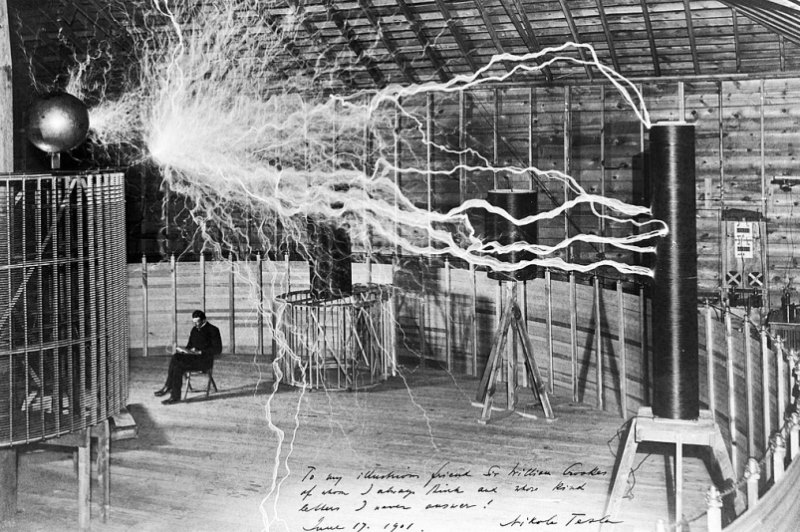
Tesla’s Coil produced high currents able to discharge linearly like a bolt of lightning, or a modern super capacitor. This approach contrasts with a mechanical flywheel whose energy output reduces as it runs down. However, both approaches are unsuitable for consumer electrical devices.
A battery discharging rate overcomes these limitations by delivering consistent energy over a more continuous period. Batteries don’t mind temporary overloading. Although this can only be for a short period to avoid stressing their chemistry.
Some remote control hobbyists stretch this science to its limits by demanding battery delivery way over its limits. They achieve this at the cost of shorter battery life, and higher risk of failure. We should only do so with conscious foreknowledge we could be risking the battery and the device.
Limiting the Depth of Discharge of Batteries
A mechanical flywheel may run down completely without damaging its structure. But a chemical battery could become useless after every single ion and electron moved to the positive cathode. Hence most devices detect when their voltage drops suddenly, and disconnect according to Battery University.
Responsible rechargeable battery management involves entering the recharge cycle before cells reach their critical depth-of-discharge limits. Better batteries also have their own safety features. They may refuse to continue at the risk of damaging their own chemistry.
More Information
Battery Strength and Key Factors Behind It