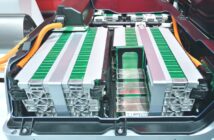
Battery management systems (BMS) are technologies that oversee battery packs. These are in turn assemblies of battery cells in a matrix, delivering a particular overall voltage and current over time. A BMS role normally includes the following according to Synopsys:
- Provide protection while monitoring the battery.
- Estimate the battery operational state ongoing.
- Continually optimize the battery’s performance.
- Report operational status to an external device.
Management systems provide this service at cellular or cell-modular level, to maintain the installation within a generally safe operating area (SOA). They are becoming invaluable for lithium-ion installations, because these may run out of control beyond strict parameters. Here is a very brief summary of BMS primary functions.
Three Critical Functions of Battery Management Systems
Electrical Management Protection over Current
Electrical current is a stream of charged electron particles passing through a device, a conductor, or a space. The goal is to keep the cells, or cell modules comfortably within their SOA range.
Lithium-ion cells have different ranges for charging and discharging. A battery management system intervenes when electric current exceeds these norms, for example during a short-circuit condition.
Battery Management System to Control Voltage
Voltage is the pressure forcing the electrons through the device, conductor, or space. Every lithium-ion battery cell must remain within its safe voltage range, for the sake of itself and the system. A BMS also monitors this space.
A particular cell voltage range depends on individual chemistry and operating temperature. Voltage becomes critical during recharging. If a cell, or cell module moves outside this range, the BMS responds accordingly.
Thermal Management of Lithium Battery Packs
Temperature control is a critical safety role battery management systems exercise over lithium-ion battery installations. They can identify early signs of thermal runaways, before they erupt into fire and / or explosion.
However, a BMS also performs a lesser-known function of monitoring for low temperature. Charging below 0 °C / 32 °F can be physically problematic, and cause metallic plating on anodes during sub-freezing conditions. We touch on capacity management in our next post.
More
Repurposing Materials in Secondary Batteries