

If your friend showed you their new electric car, you might want to know how fast it goes. And how long the battery charge would last before it needed replenishing. Understanding performance factors like these contribute to wise purchasing decisions. Would you like to know how long a battery lasts before purchasing it? Capacity and battery ratings are the bottom line of electrochemical performance.
Battery Rating Capacity and Performance
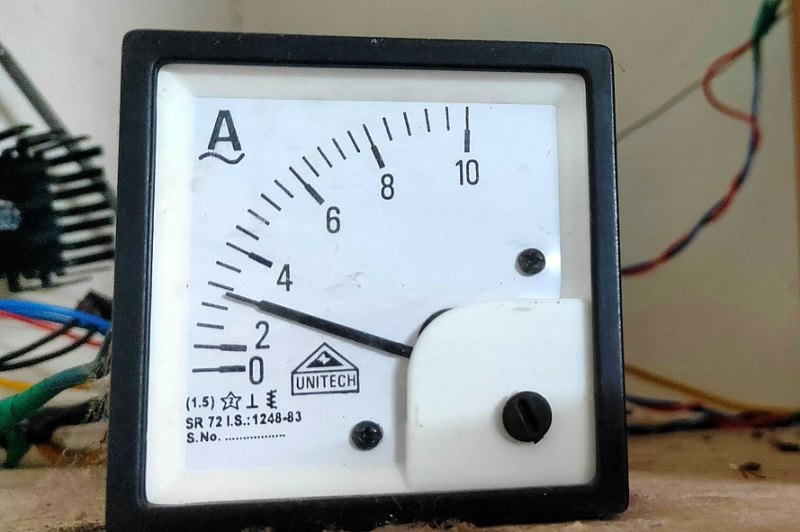
Capacity is a measure of how much energy a battery or cell can deliver over time. This makes sense, because we need a quantity of volts for a set period. Battery scientists express this in terms of ampere hours, because they want to compare a wide range of readings.
The standard measure that battery scientists use is ampere-hours (Ah) or amps for short. Now a coulomb is the international standard unit of electric charge. One ampere equals one coulomb over one second, passing through a conductor. This provides an international norm for comparing batteries.
Of course, the actual capacity of a particular lead battery depends on three things. These are (a) the active materials in the battery, (b) the amount of electrolyte, and (c) the surface area of the plates. One way to gauge the capacity of the lead-acid battery would be to:
- Create a test environment with a constant temperature of 77F / 25C.
- Discharge the battery at a constant current until it reaches terminal voltage.
- Multiply the constant discharge voltage by the time the discharge took.
How Does This Compare to the Rated Capacity?
No two batteries are identical, and so their actual capacity varies. Hence battery makers determine the average capacity of a group of cells at a particular rate of charge. If a battery is rated at 200 ampere over ten hours, then it should deliver 20 amperes for 10 hours at an ambient temperature of 77F / 25C.
More Information

1 Comment
Hi Richard. Good article. Your last statement: “If a battery is rated at 200 ampere over ten hours, then it should deliver 20 amperes for 10 hours at an ambient temperature of 77F / 25C.” Is 20A for 10hrs correct? Shouldn’t it be 20A for 100 hours in terms of capacity? Am I missing something? I understand that if it can do 200A for 10hrs, then it certainly can do 20 for the same amount of time, but will it do 20 for 10-times the hours? Shouldn’t cutting the power to 10% lengthen the hours by 10x (in a perfect world)?