We are exploring the highlights of a comprehensive European Union report. This poses the question ‘can a lithium-ion battery fire be put out on a vessel?’ We have reached the point where the Union’s scientists begin to probe what causes marine lithium battery fires to break out. In the previous post, we summarized their opinion of the commonest causes of marine lithium battery fires. These are design, production, monitoring and charging.
Further Examples of Causes of Marine Lithium Battery Fires

The European Union scientists point out the risk of shock and vibration in heavy seas. Because vessel hulls, they say, “can be slammed with waves of high G-force at frequencies of ten seconds over hours,” with severe consequences for batteries.
“Over extended periods of the shock and vibration effects on plastic-encased batteries can lead to significant internal damage, which, as a consequence leads to short-circuiting and battery fires,” they explain. Although they concede that aluminum or steel cases could, “provide structural protection from these causes of marine lithium battery fires. And, in the worst-case scenario, slow or contain a lithium-ion fire.”
Further Problems Associated with Poor Quality Manufacture

The researchers express their frustration that lithium battery fires caused by poor production so often go unreported, since the fire destroys the evidence. Although they still believe, “substandard cell manufacturing quality causes at least 2% to 5 % of all lithium-ion battery fires.
They believe the production-related causes of marine lithium battery problems can be reduced by only sourcing cells from proven manufacturers. Moreover, they favor choosing the right cell technologies too.
Accordingly, they recommend cylindrical and prismatic cells, while avoiding polymer cell technologies for marine batteries. Their reasons are the latter “are often not sufficiently robust enough to survive the extremes of the open water”.
Related
Containing a Lithium Battery Fire: EU Update 4
Marine Battery Fire Suppression: EU Update 3
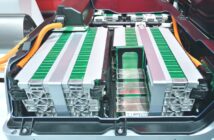
Preview Image: Rectangular A&TB Prismatic Li-ion Cell