

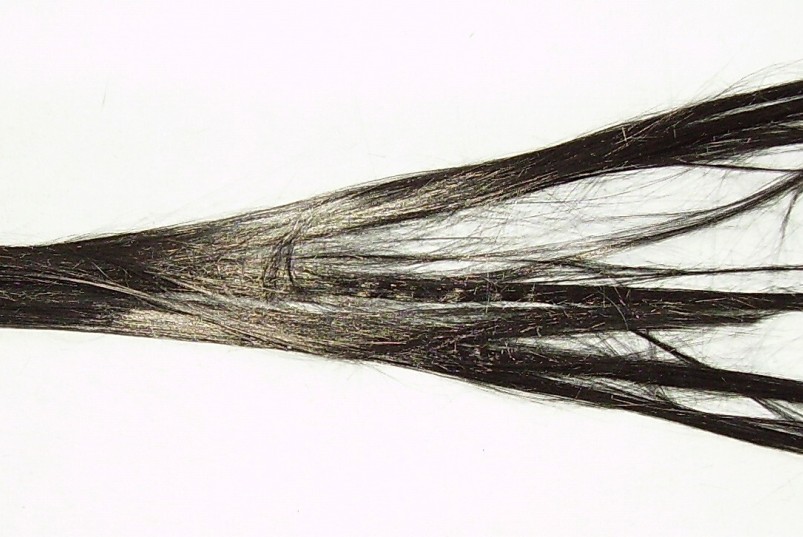
Separators play an essential role in keeping battery electrodes apart, and preventing short circuits between them. Such incidents can destroy a battery, and, in the case of lithium-ion, lead to catastrophic fires. Manufacturing these separators comes at a significant cost. Novel ceramic separators with long carbon fibers are more affordable, and improve battery performance too.
Carbon Fiber in Ceramic Separators Boosts L-Ion Power
Scientists at Oak Ridge Laboratory in Tennessee, United States, are working with a vendor to validate a new type of separator. They have assessed a novel, reinforced, composite lithium ion battery separator, in terms of performance, durability, and safety.
Oak Ridge’s role has been to assess non-woven, reinforced composite separators for lithium-ion batteries. But first, they had to develop a new classification system, and method for carrying out these complex evaluations.
As their work proceeded, the scope expanded to include ceramic-filled separators, including ceramic separators with 1% long carbon fibers that are our focus for today. Their findings are quite ground-breaking, and could influence how future lithium-ion batteries are made.
Findings and Conclusions of Far-Reaching Study
The ceramic separators proposed by the vendor were available in either free-standing mode, or dry-coated onto a completed electrode. Oak Ridge assisted by assessing the proposal, whereafter the vendor will carry the project further.
The study confirmed that dry-coating the electrodes eliminated the need for a free-standing separator. This achieved a saving that exceeded the cost of the process. Moreover, the integrated ceramic separators with long carbon fibers improved the overall safety of the battery.
Eliminating the traditional polyethylene / polypropylene separator created a thermally-stable composite structure. The prototype coin-cell battery displayed a stronger more flexible form, while speeding ion transfer, and hence charging / recharging.
More Information
Selectively Permeable Membrane Separator


