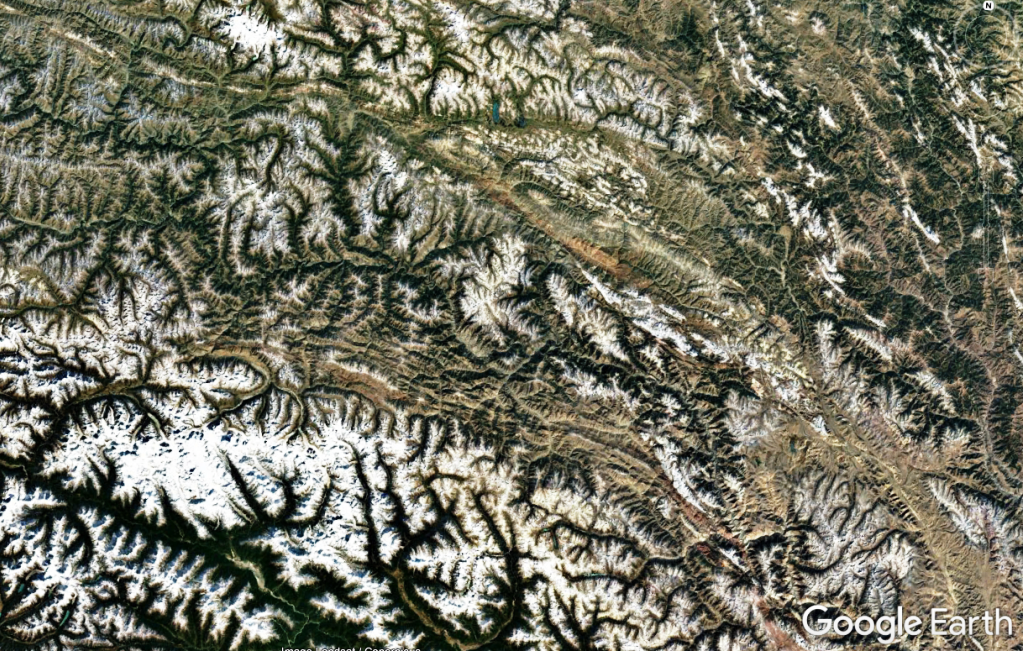
The Changpa semi-nomad tribes share the Chantang ice desert on the high altitude Tibetan Plateau with their Changthangi goats. These hardy creatures respond to -40 ºC / ºF winter temperatures by growing super-soft undercoats ten times finer than human hair. The Changpa herders shear these coats in summer, whereafter they become the most expensive cashmere wool in the world.
Climate Change Threatens the Changpa Semi-Nomad Herds

The Changpa people are hardy as their goats, says Andrew Newby, photographer for BBC News channel who visited Tibetan Plateau. But their way of life is fragile.
Someday their goats may no longer roam the roof of the world because of climate change. They face a triage of threats. First, China is supplying the market with artificial cashmere. Second, their younger generation yearns for better education, and a more comfortable easier life. And finally, heavy snow has begun arriving as early as late November instead of January or February. As a result the Changpa semi-nomad families have to import expensive food for their goats in winter. Then, in ultimate irony the cold season is warmer and the quality and quantity of the undercoats are falling.
But Does This Really Matter in the Greater Order of Things?

We could make a case that we have more to worry about, given the Covid-19 challenge and the growth of nationalism. However, we could also make a case that we are in this climate thing together, and a blow to one is a blow to all.
John Donne was a metaphysical priest in 17th century England who became Dean of St Paul’s Cathedral, London and parliamentarian. He wrote a poem he titled No Man is an Island. In this, he said if the ocean washes part of a cliff away, this affects the whole landmass. If the Changpa semi-nomad tribes vanish from the Tibetan Plateau we will all be poorer, especially because they may never return.
Related
If We Lost the Ice Sheets What About the Land
Comprehend a Gigatonne of Ice by Volume
Preview Image: The Chantang Ice Desert (Google Earth)