Frances Sprei from Chalmers University, Sweden, and Willett Kempton of U.S. University of Delaware, may seem an unusual combination. After all, Kempton is an electrical engineer, while Sprei seems more interested in space and earth. None the less, they worked together to investigate styles of charging electrical vehicles, and identified three very different personas.
Researching Approaches for Recharging Electric Vehicles
Sprei and Kempton conducted a series of interviews with novice and experienced electric vehicle drivers. The newbies transferred their previous experience gained while driving gasoline-power autos.
However, as they became more experienced, they tended to adapt knowledge gained from actually charging electric vehicles. This fresh information from recent experience included:
- The longer time it took to top-up (recharge) their electric vehicles.
- The fact that electric vehicle charging was a ‘plug-and-play’ affair.
- Opportunities to combine activities like shopping and walking the dog.
This particular study aimed to fill a knowledge gap, by analyzing user perceptions, mental models, behavioral habits and recharging strategies. The information gained identified impediments imposed the three models, and how new perceptions might increase the rate of electric vehicle adoption.
Three Mental Models for Topping Up Electric Vehicles
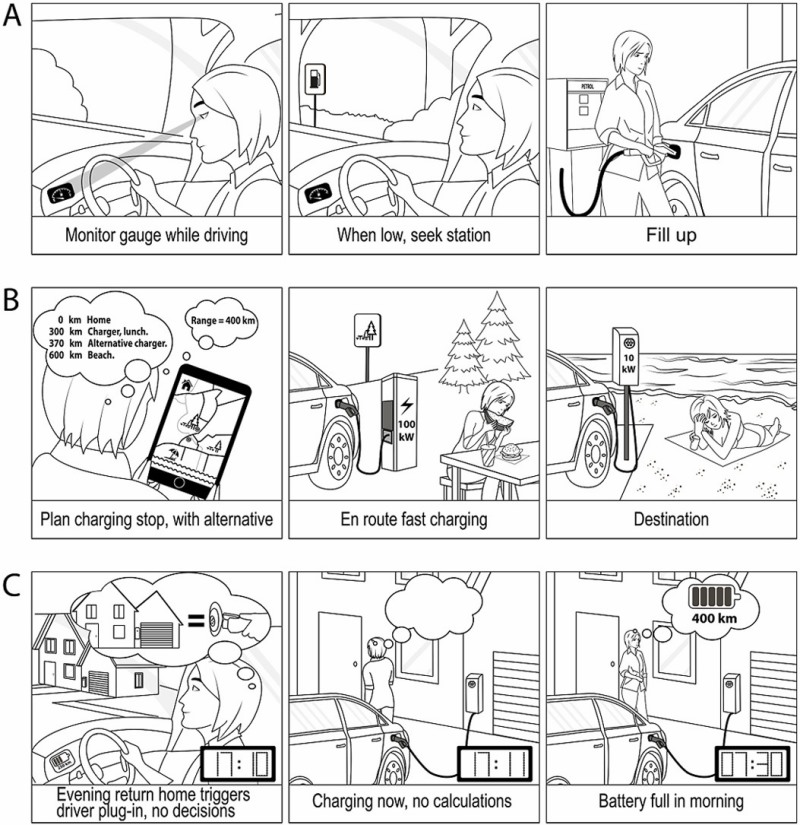
- Inexperienced drivers drivers in the sample tended to use the ‘Monitor Gauge’ method. To them, the battery icon worked the same way as the old petrol pump image. When it was low they looked for a filling station to top up.
- Long distance drivers preferred the ‘Planned Method’. They arranged their trips carefully to avoid range anxiety, and knew where to top up regardless of the actual battery level. They also had a second, default recharging station ‘in case’.
- But the daily drivers favored a more happy-go-lucky method, by using unrelated events to trigger battery charging. They might, for example, plug in when they arrived home after work. While others might use a date at the movies as an opportunity to recharge.
None of these methods for charging electric vehicles is necessarily ideal for prolonging battery life. Although of course, as every consultant knows, changing actual behavior can be another matter.
More Information
Nuclear Battery That Never Needs Recharging