It is quite normal to view the world from our own perspective. Indeed, this may be one of the coping mechanisms that allowed humans to evolve. None the less, we need broader climate change feedback in order to assess the overall state of Earth. We have National Centers for Environmental Information to thank for some of the information in this post.
October 2019 NOAA Climate Change Feedback
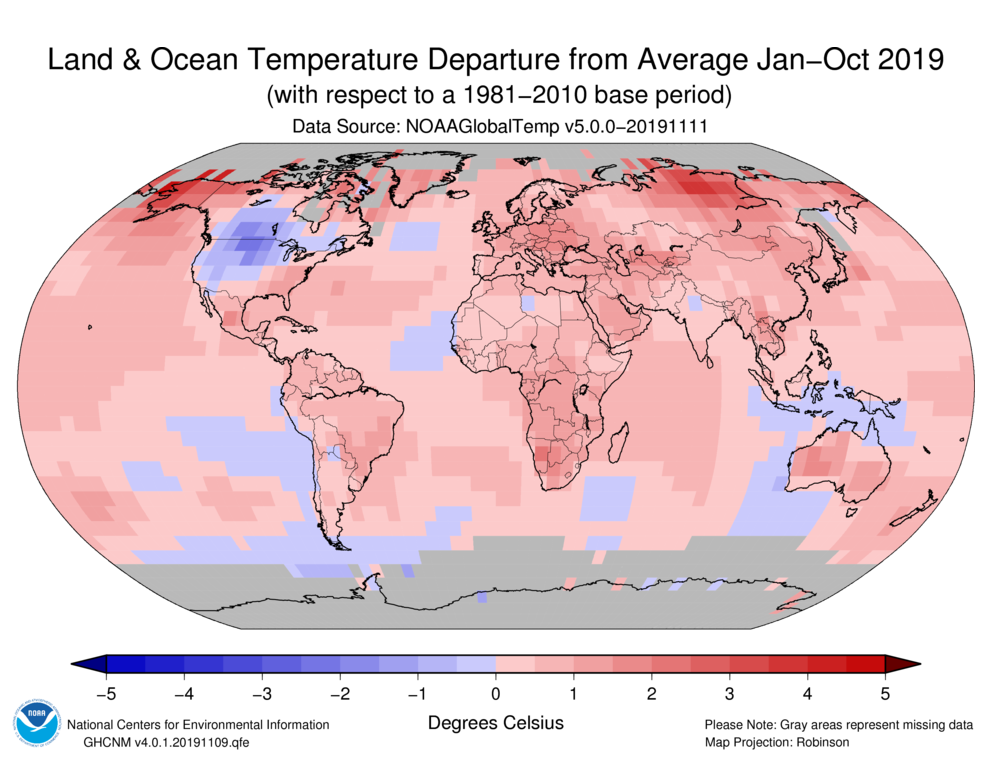
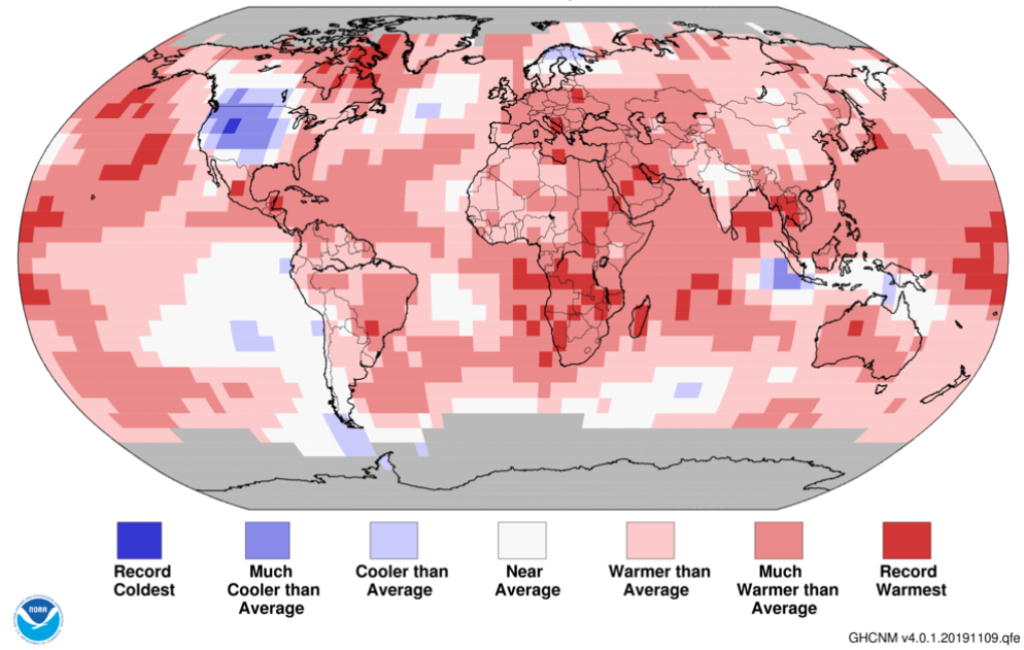
The National Oceanic and Atmospheric Administration (NOAA) says October 2019 was the second-warmest October in its 140 year global database. Moreover, the 2019 year-to-date record was also the second-highest on record for January to October.
The global temperature for October 2019 was 1.76°F above the 20th century average of 57.1°F. And it was only 0.11°F short of the October 2015 all-time high. The 10 warmest Octobers in the data all occurred since 2003. However, the five warmest of these all happened since 2015. Therefore, this climate change feedback confirms what scientists have been predicting for decades.
There Were However Some Regional Fluctuations
The hot spots for October 2019 were Alaska, northern Canada, north-central Russia, eastern Europe, the Middle East and western Australia. Temperatures there were at least 3.6°F above average. By comparison, the coolest areas in North America were the western half of the U.S. and southwestern Canada. Temperatures there were at least 2.7°F below average.
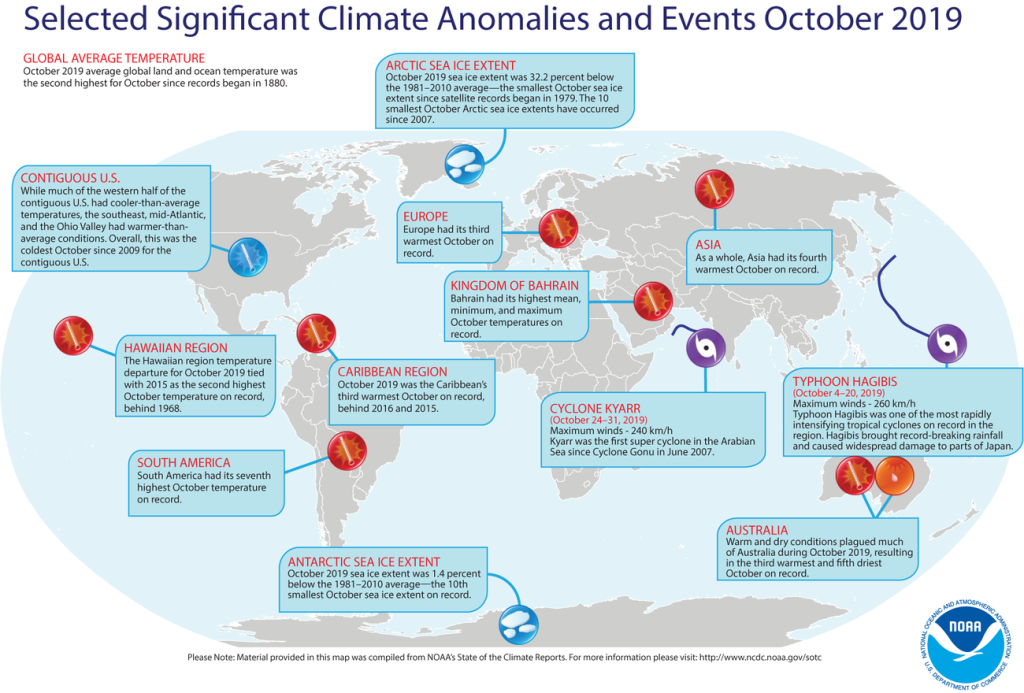
The extent of Arctic sea ice was the lowest the National Centers for Environmental Information recorded during the past 140 Octobers. In fact, it was almost one-third smaller than the 1981–2010 average according to National Snow and Ice Data Center. Moreover, October 2019 was also the 43rd consecutive October with temperatures – at least nominally – above the 20th century average.
Climate feedback data from National Centers for Environmental Information confirms Earth is becoming steadily warmer. We know how to manage the trend by reducing our emissions. However, the hockey-stick approach still reigns supreme for too many.
Related
7 American Cities Dying After Warming
Arctic Divers View of Climate Change in Action
Preview Image: Land and Ocean Temperature Percentiles