The short answer is yes, lithium-ion batteries could catch fire when not in use, although the risk is low (but not zero). We have learned to look out for manufacturing defects and signs of ageing. Although we know that how we look after them does also play a role.
How Could Idle Lithium-Ion Batteries Catch Fire?
Here are the five main reasons why lithium-ion batteries could catch fire when not in use, based on our own extensive research.
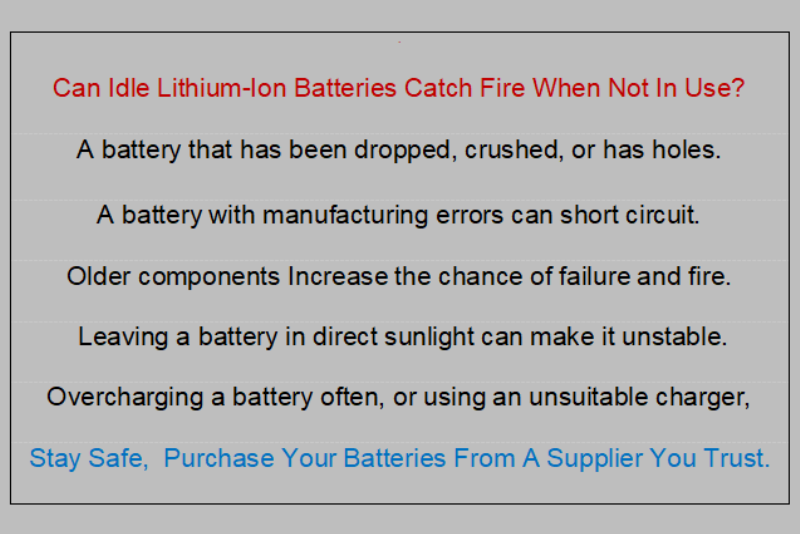
- Damage Inside The Case. A lithium-ion battery that has been dropped, crushed, or holes made into it may develop an internal short circuit. This can occur immediately or even days or weeks later.
- Badly-Manufactured Battery. Tiny mistakes inside a lithium-ion battery may eventually cause the positive and negative electrodes to touch. This creates a short circuit that releases all the energy.
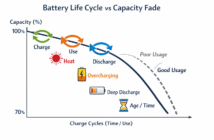
- A Battery That Is Getting Old. The internal components slowly degrade as lithium-ion batteries get older. This increases their chance of failure, especially after many charge and discharge cycles.
- A Battery That Is Too Hot. Heat speeds up chemical reactions inside a lithium-ion battery. Leaving one in a hot car, in direct sunlight, or near a heater can make it unstable and catch fire.
- Overcharging / Using Bad Chargers. Repeatedly overcharging a lithium-ion battery, or using an unsuitable charger, may damage a battery internally. It could catch fire even if we don’t use it afterwards.
In Our Experience, What Happens Next?
If the internal temperature in a lithium-ion battery rises beyond its safe range, then the process we call thermal runaway kicks in. The battery generates more heat than it can dispose of. This causes flammable gases to form. If those gases ignite, then the battery can even explode.
We believe that all lithium-ion batteries should incorporate protection circuits that greatly reduce these risks. To stay safe, we recommend you purchase your batteries from a reputable supplier you know and trust.
Please remember this. Always store your batteries in a cool, dry place when not in use. Avoid damaging them, use quality chargers, and recycle any battery that becomes swollen, unusually hot, or damaged. The risk of fire is low, but it is never zero.
More Information From Our Blog