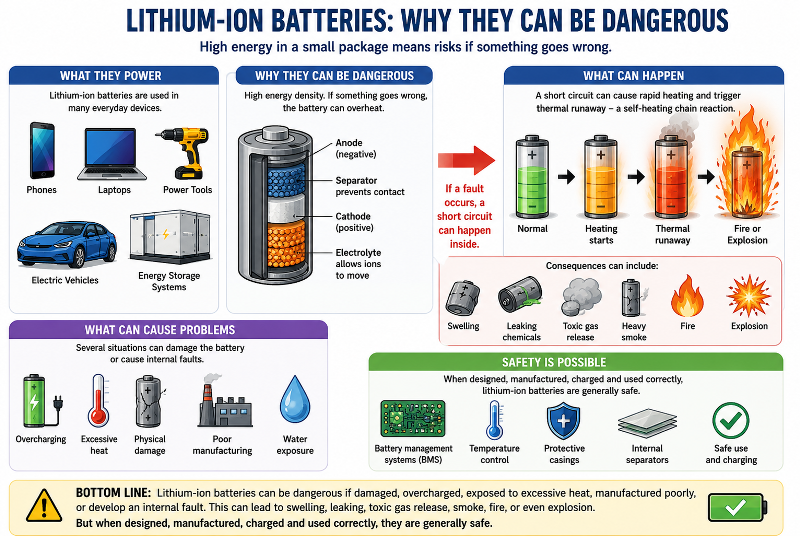
Lithium-ion batteries power many phones, laptops, power tools, electric vehicles, and energy storage systems. They pack a lot of energy into a small, casing. But they do have their limitations. Today we ask, will lithium-ion batteries become less dangerous following a fresh discovery?
Why Lithium-Ion Chemistry Can Be Dangerous
High energy crammed into a small casing can make these batteries hazardous, if something goes wrong:
- A lithium-ion battery can become dangerous if it is damaged, overcharged, exposed to excessive heat, is manufactured poorly, or develops an internal fault.
- A short circuit can then occur inside the casing. This may cause rapid heating, and can trigger a thermal runaway chain reaction.
- When thermal runaway does occur, the battery can swell, leak chemicals, release toxic gases, smoke heavily, catch fire, or even explode.
- Lithium-ion battery fires are particularly difficult to extinguish, because the battery can continue self-generating heat after the fire starts.
Lithium-ion batteries, despite these risks, are generally safe when designed, manufactured, charged, and used correctly. But things may sometimes still go wring. This begs the question, could lithium-ion batteries eventually become less dangerous?
A Step in The Right Direction For Lithium-Ion Batteries
Researchers at California Institute of Technology have taken an important step forward to making lithium-ion batteries safer.
They developed a way to watch batteries while they charged, and discovered exactly when harmful lithium metal begins forming inside them. This lithium ‘plating’ can reduce battery life and increase the risk of overheating or fire.
By identifying the voltage and charging conditions that trigger plating, the team created a performance map that shows safe charging limits.
Their findings could help manufacturers design smarter batteries and charging systems, that pause before damage begins. This could in turn lead to safer, longer-lasting batteries for our phones, vehicles, and energy storage systems.
More Information