Allessandro Volta’s tower battery was a brilliant inspiration that set the stage for future designs. However, there were several aspects for Daniel and Dancer and others to improve:
1… The vertical design exerted pressure on the brine-soaked discs causing them to leak and short circuit the metals.
2… The battery only worked for an hour before hydrogen bubbles formed on the copper discs, reducing internal resistance.
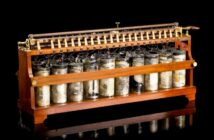
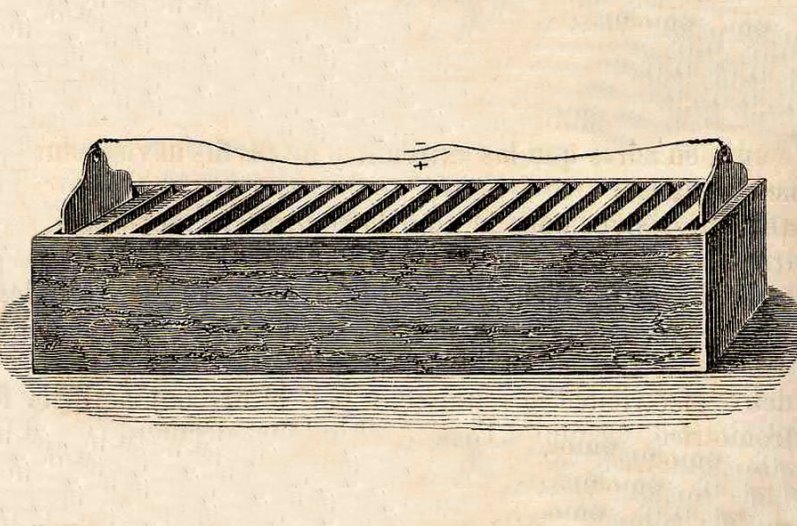
Scotsman William Cruickshank resolved the compression issue by inventing the horizontal trough battery.
Two Notable Improvements by Daniel and Dancer
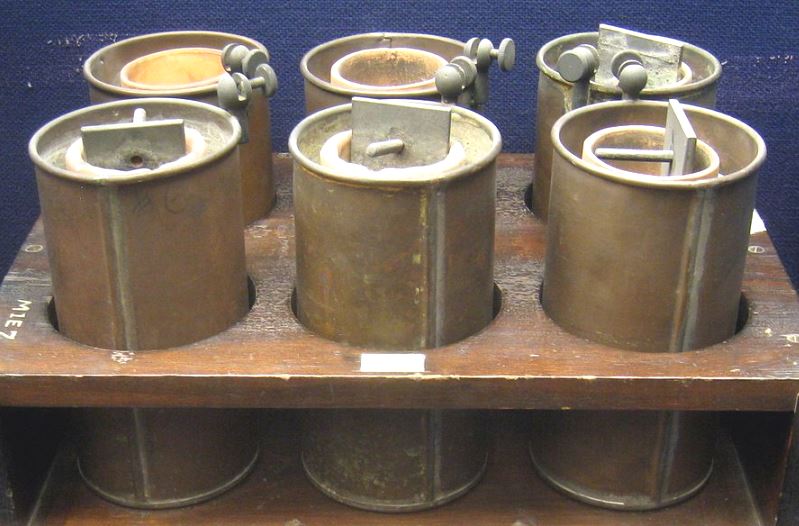
Englishman John Daniell came up with a neat improvement in 1836, when he invented a two-stage battery cell. He first put sulfuric acid and a zinc electrode in an un-glazed earthenware container. And then he placed this inside a copper pot containing a copper sulfate solution.
The zinc and copper were the electrodes, while the earthenware pot was porous allowing the electrons to pass through. The result was a great improvement producing a steady 1.1 volts. His battery chemistry soon began powering new-fangled telegraph networks in United States.

Meanwhile another Englishman John Dancer took a break from making scientific instruments to tweak the Daniell cell in 1838. This time the zinc anode was in a porous pot containing zinc sulfate. While this stood inside a copper can containing copper sulfate.
John Daniel and John Dancer turned Allessandro Volta’s flash of inspiration into a practical solution. They did not reinvent battery electrodes and electrolyte though. But they did inspire the cylindrical batteries with terminals running through the middle we still find in our stores.
Recent Posts
Lead-Acid Battery History in the Beginning
How to Make Your Own Daniell Cell
Preview Image: Six Daniell Cell Batteries