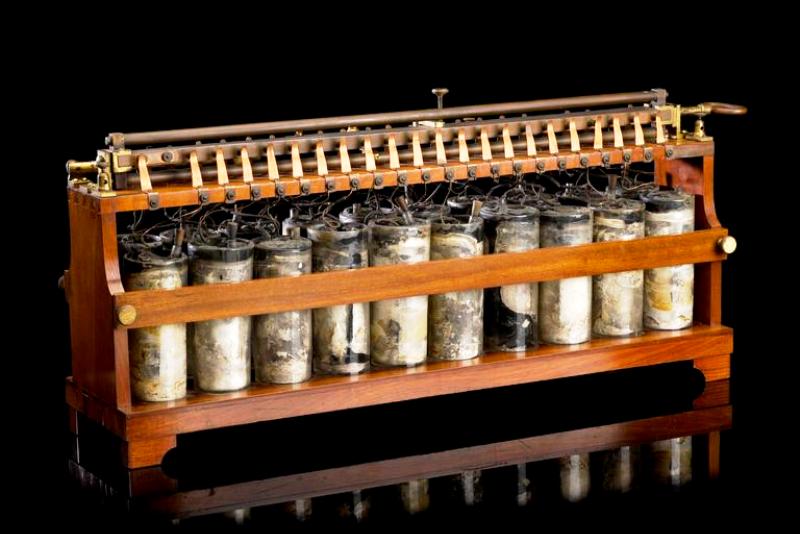
Was that a photo of the the oldest lead-acid battery still in existence, that you saw when you arrived here? Well, it dates back to around 1860, according the Science Museum Group where we found the image.
The Group confirms that the battery contains 20 cells, “arranged for experimental and laboratory purposes, plus a switch for connecting the cells either in series or in parallel”.
At this stage we should mention that the lead-variety electrodes are still rolled in ‘jelly roll’ format. It would take another brainwave to perfect the lead-derived sheets we know today.
The Birth Of The Lead-Acid Battery
The story of our lead-acid battery begins long before there were cars, telephones, or electric lighting. Electricity fascinated early scientists, but they knew very few ways to store it.
Most early batteries, such as Alessandro Volta’s voltaic pile, could produce electricity only once, before their chemicals were exhausted. They were also expensive, messy, and impractical for long-term use.
Meanwhile, Europe was entering the industrial age. Telegraph systems were spreading rapidly, laboratories were experimenting with electromagnetism, and inventors needed a reusable source of electrical power.
French physicist Gaston Planté resolved this challenge in 1859, when he found that two sheets of lead placed in dilute sulfuric acid could store and release electricity repeatedly.
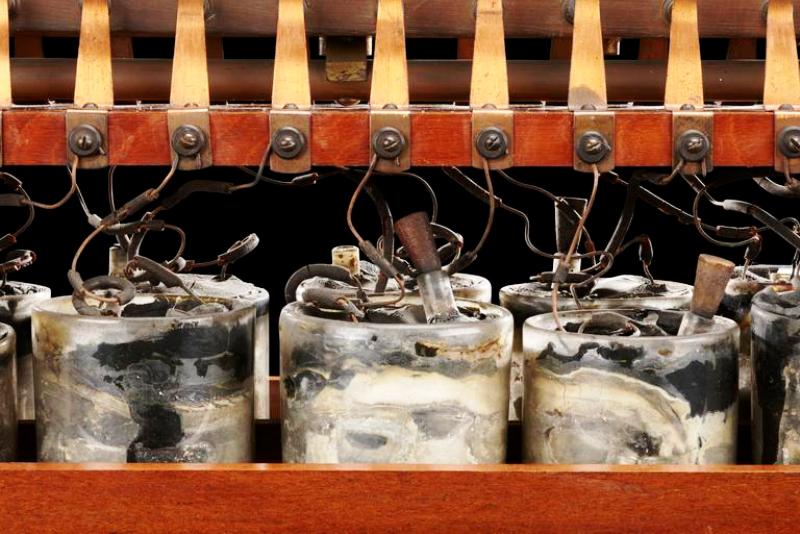
Is This The World’s Oldest Secondary Battery?
Glance your eyes up to that photo again. You are probably looking at the oldest lead-acid battery, in the absence of a competitor to this claim. This achievement changed history, because it allowed scientists to store electricity to use for another time.
This giant leap forward opened the door to backup power systems, electric lighting, railway signaling, telecommunications, submarines, and eventually motor vehicles too. But there was a catch. The battery was neither portable not practical …
In 1881 another French genius, Camille Faure, improved Planté’s design by coating vertical lead plates with active paste. This made lead-acid batteries smaller, stronger, and cheaper to manufacture.
From there on, lead-acid batteries would spread across the industrial world, revolutionizing life as they did. Many other types blossomed, withered and died. But our amazing lead acid batteries are still with us a century and a half later …
More Information
Gaston Plantés Lead-Acid Battery